Blog how to clean
How to Clean Grout: Floors, Showers and Tile Lines
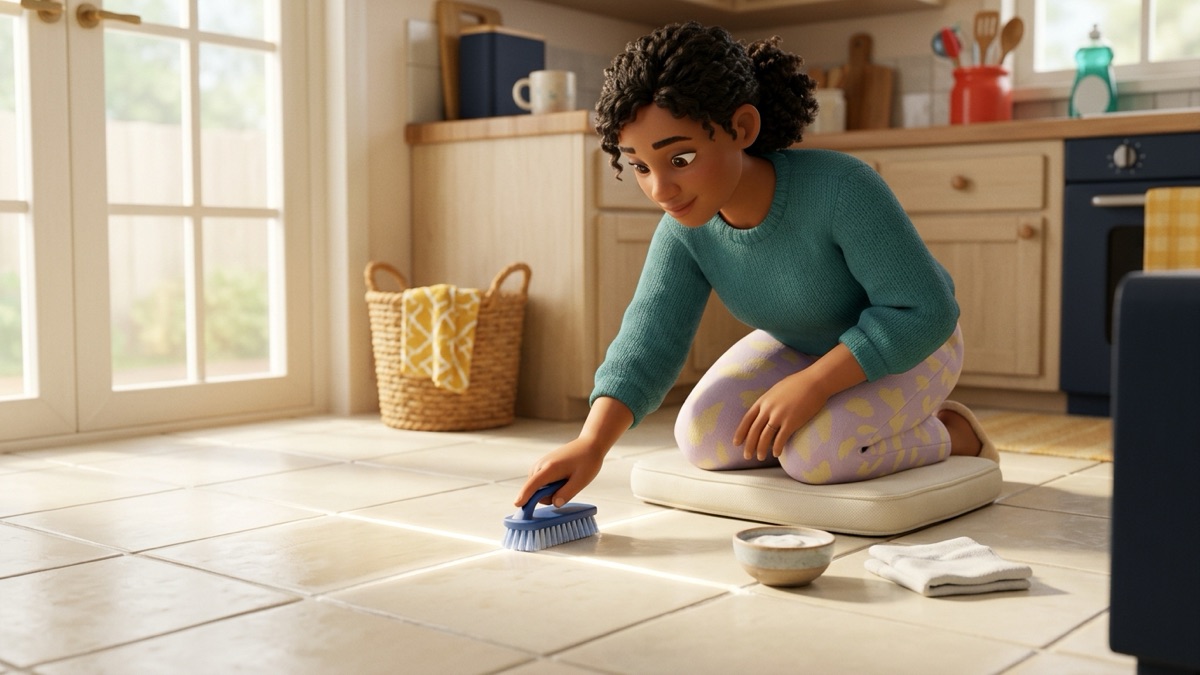
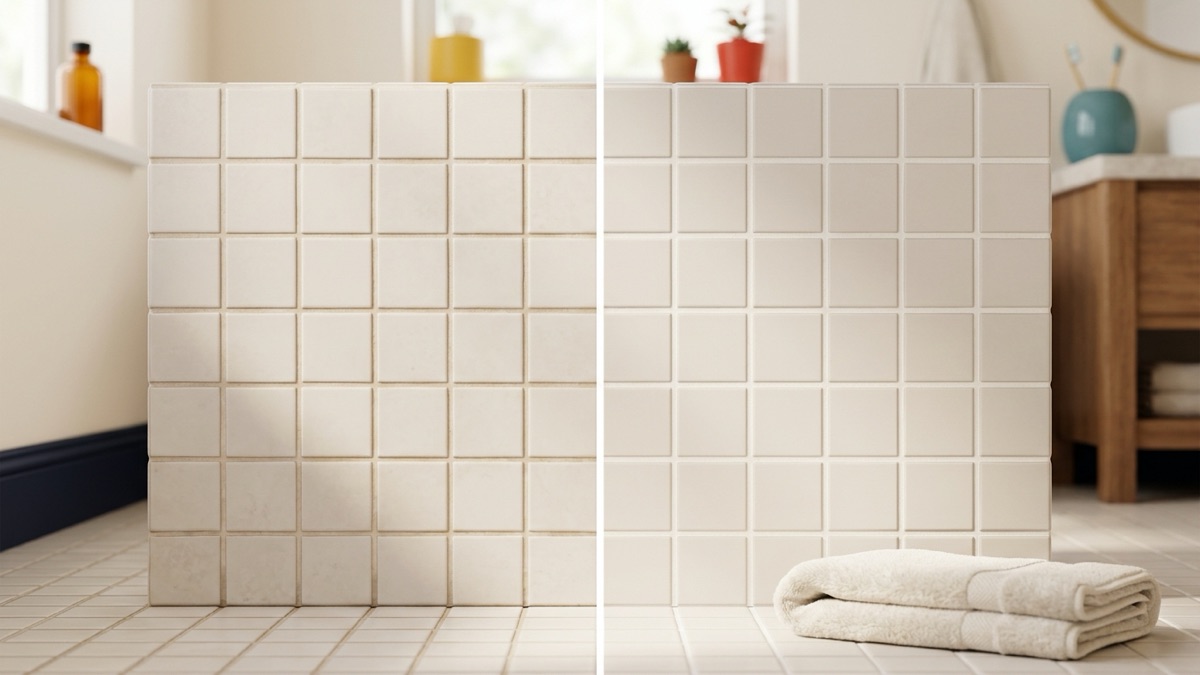
Grout is the part of tiling nobody warns you about. The tiles wipe clean in a second, but the lines between them slowly go from white to "latte." Most grout comes back with a brush, warm water, some baking soda and a little patience, one line at a time.
Quick answer
Sweep or rinse first, then scrub the grout lines with warm water and a stiff nylon brush. For lines that stay dark, spread a paste of baking soda and a little water, scrub, rinse well with clean water and dry. Use one cleaner at a time, never mix bleach with vinegar, and seal once it is fully dry.
Key takeaways
- Start with warm water and a stiff nylon brush. It is gentler than you think it needs to be, and often enough.
- A paste of baking soda and water is the next step up for most ceramic and porcelain tile grout.
- Keep vinegar off grout, and keep bleach occasional. Never mix bleach with vinegar, ammonia or other cleaners, and never use them one after the other.
- Rinse and dry every time. Leftover cleaner and standing water are what make grout dingy again.
- One grout line, or one row of floor tiles, per short sprint. Nobody does a whole floor in one go.
Why does grout get dirty so fast?
Unless it is epoxy, grout is a little porous, and it usually sits slightly lower than the tiles. So dirt, mop water, soap and minerals settle into it every time you clean or shower. That is also why the Tile Council of North America (TCNA) says sealant helps prevent staining, unless your grout is epoxy or has a self-sealant.
Darker lines are normal wear, not a sign you did anything wrong.
What do you need to clean grout?
- A stiff nylon brush. TCNA recommends nylon or plastic scrubbers for grout. A long-handled one saves your back on floors.
- Baking soda, mixed with just enough water to make a spreadable paste.
- Warm water, two cloths, gloves and a cushion or knee pad.
- One cleaner made for tile and grout, only if baking soda is not enough.
How do you clean grout with baking soda, step by step?
1. Clear and loosen
Sweep or vacuum floors so you are not scrubbing grit into the lines. In a shower, rinse with warm water. Open a window or run the fan before any cleaner comes out.
2. Scrub with warm water first
Dip the brush in warm water and scrub a few lines, working along each line. Sometimes this alone is enough.
3. Add the baking soda paste
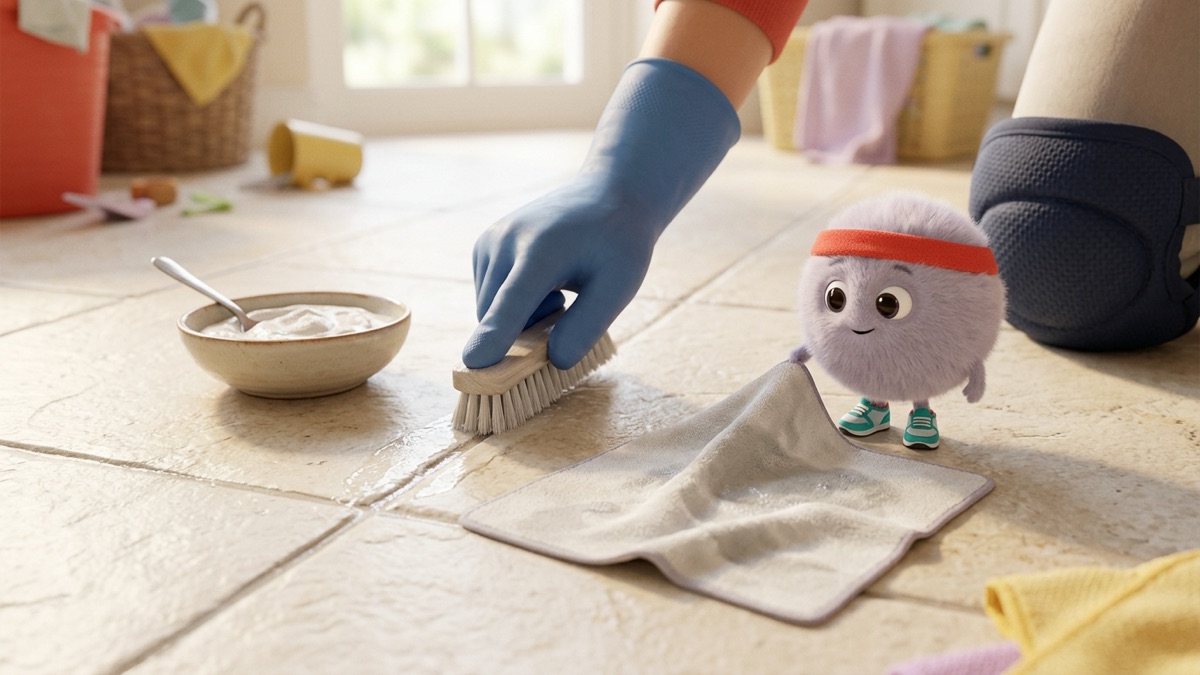
For lines that stay dark, spread the paste along 3 or 4 of them with your finger or the brush. Baking soda is a mild abrasive, and its maker, ARM & HAMMER, suggests it for scrubbing soap scum and grime off tiles and lists ceramic and porcelain among the surfaces it suits.
TidySprint is made by Viral Labs and is not affiliated with any other app, author or brand named here.
4. Scrub one line at a time
Scrub along each line in short strokes. The goal is these 3 or 4 lines, not the whole floor.
5. Rinse with clean water
Wipe the paste off with a cloth dipped in clean water, and change the water as it gets cloudy. TCNA says to rinse any cleaner off thoroughly and not let residue dry on tile and grout.
6. Dry it
Wipe dry with a towel and leave the fan on or the window open. Dry grout is easier to judge (wet grout always looks darker) and is ready for sealing.
Which grout cleaner should you use?
| Situation | Try this | Skip | Why |
|---|---|---|---|
| Everyday grime on floor or shower grout | Warm water and a nylon brush | Steel wool, wire brushes | TCNA recommends nylon or plastic scrubbers |
| Lines that stay dark | Baking soda paste, then rinse | Scouring powders | Mild abrasive, easy to rinse |
| Heavier buildup | One cleaner made for tile and grout, per its label | Oil or wax-based cleaners | TCNA says they leave a residue that attracts dirt |
| Colored grout | A neutral cleaner only | Bleach, alkaline and acidic cleaners | TCNA recommends only neutral cleaners for colored grout |
| Grout next to marble, limestone or travertine | A neutral stone cleaner or mild dish soap | Vinegar, lemon, acids | The Natural Stone Institute says acids can dull or etch these stones |
| Mildew spots | Detergent and water, then dry | Anything mixed | EPA's advice for small areas of mold on hard surfaces |
TCNA also says a rented steam cleaner can bring mildew stains to the surface. Check the machine's manual first.
Can you use vinegar or bleach on grout?
- Vinegar: TCNA says acidic tile and grout cleaners should only be used by professionals. Vinegar is an acid, so we leave it off grout. It can also dull or etch natural stone.
- Bleach: TCNA says bleach should not be used on tile and grout regularly, because over time it can strip the sealant from grout. On colored grout, skip it entirely.
- Never together: Poison Control says bleach mixed with an acid, such as vinegar or some toilet bowl cleaners, makes chlorine gas, and bleach mixed with ammonia makes chloramine gas. Both are dangerous to breathe.
- Never one after the other: Poison Control describes a case where someone used an acid toilet bowl cleaner, forgot to flush, then added a bleach cleaner and got sick right away. Leftovers mix too.
Heads up
Use one cleaner at a time and follow its label, including what it says about gloves. Open a window or run the fan, especially in a small bathroom. If you ever feel your eyes, nose or throat burn, leave the room and get fresh air. Poison Help in the US: 1-800-222-1222.
What about mold or mildew in grout?
EPA says that if the moldy area is less than about 10 square feet (roughly a 3 foot by 3 foot patch), in most cases you can clean it yourself.
EPA's advice: scrub mold off hard surfaces with detergent and water and dry completely, wearing gloves, goggles without vent holes and an N-95 respirator. Clean and dry moldy corners before you caulk. Fix the damp too, or it will likely come back: the shower tiles guide has the squeegee habit.
If it covers more than about 10 square feet, followed a leak or flood, or keeps coming back from behind the tile, call a professional.
How do you seal grout after cleaning?
Once the grout is clean and completely dry, a sealer helps it resist stains, unless it is epoxy or self-sealing (TCNA). Every sealer differs, so the label is the manual: drying time first, how to apply it, when the floor or shower can get wet, and how often to reapply. Open a window or run the fan while you apply it, and test a small hidden spot first.
What if the grout will not come clean?
Sometimes it just will not, and that is not a failure of effort.
- Deep stains: some soak into the grout itself, and harder scrubbing only wears the grout down.
- Cracked, crumbling or missing grout: water can get behind the tile. That is worth a professional's look.
- Spots that return within days: usually a moisture problem, not a cleaning problem.
TCNA calls professional grout removal and replacement the last resort. A tile professional can tell you whether that is needed.
What is the 10 minute version?
One grout line per sprint is a real plan. So is one row of floor tiles.
| Minutes | Do this | Low-energy tip |
|---|---|---|
| 1 to 2 | Sweep or rinse one small area, window open | Pick the spot you see most |
| 3 to 7 | Paste on 3 or 4 lines, scrub along each one | Sit on a cushion, not your knees |
| 8 to 9 | Rinse with a clean damp cloth | Change the water if it is cloudy |
| 10 | Towel dry and stop | The next lines are the next sprint |
Try it
Start a 10 minute sprint in the free cleaning sprint timer. It gives you a ring to watch and a body double beside you, and it ends on time, so "just these 4 lines" stays true.
A kind wrap-up
Grout rewards small, repeated effort. Brush, paste, rinse, dry, seal when it is ready, and stop when the timer stops. Next time, pick up where you left off.
For the tiles around it, see how to clean tile floors and how to deep clean a bathroom. The how to clean your house guide has a 10 minute version of every room. The TidySprint app, coming soon, will turn a photo of a room into tiny tasks like "scrub 4 grout lines."
TidySprint guides share practical cleaning and routine ideas. They are not medical advice, diagnosis or treatment. If ADHD, depression or anything else is making daily life hard, please talk to a clinician. Using a strong cleaner? Open a window, follow the label, and never mix bleach with ammonia, vinegar or other cleaners.
Questions people ask
What is the best way to clean grout?
Scrub it with warm water and a stiff nylon brush first, then use a paste of baking soda and a little water on the lines that stay dark. Rinse well with clean water and let the grout dry. For tougher dirt, use one cleaner made for tile and grout and follow its label.
Can you use vinegar to clean grout?
It is better not to. The Tile Council of North America says acidic tile and grout cleaners should only be used by professionals, and vinegar can etch natural stone. Never use vinegar and bleach together or one right after the other.
Is bleach safe for grout?
Only now and then, on white grout, following the label, with a window open or the fan running, and never mixed with anything. The Tile Council of North America says bleach should not be used regularly because it can strip the sealant from grout, and it recommends only neutral cleaners for colored grout.
Should you seal grout after cleaning it?
Usually, yes, once it is clean and completely dry. The Tile Council of North America says a sealant helps prevent staining unless your grout is epoxy or already has a self-sealant. Follow the sealer's label for how to apply it and how often.
What if grout will not come clean?
Some stains soak deep into grout and will not lift. If the grout is also cracked, crumbling or missing, or dark spots keep coming back, a tile professional can check it, and replacing the grout is the last resort.
Where these facts come from
- Tile Council of North America, via Why Tile: The Ultimate Guide to Cleaning Ceramic Tile: whytile.com/2020/05/the-ultimate-guide-to-cleaning-ceramic-tile/
- ARM & HAMMER: Baking Soda Cleaning Tips: www.armandhammer.com/articles/8-ways-baking-soda-cleans-for-less
- Natural Stone Institute: Care and Cleaning of Natural Stone: www.naturalstoneinstitute.org/consumers/care/
- EPA: A Brief Guide to Mold, Moisture and Your Home: www.epa.gov/mold/brief-guide-mold-moisture-and-your-home
- CDC: Cleaning and Disinfecting with Bleach: www.cdc.gov/hygiene/about/cleaning-and-disinfecting-with-bleach.html
- Poison Control: Chlorine gas: www.poison.org/articles/chlorine-gas
- Poison Control: Top tips for a safe spring cleaning: www.poison.org/articles/spring-cleaning
Read next

how to clean
How to Clean Baseboards: The 10 Minute Version