Blog how to clean
How to Clean Shower Tiles Without Scrubbing All Day
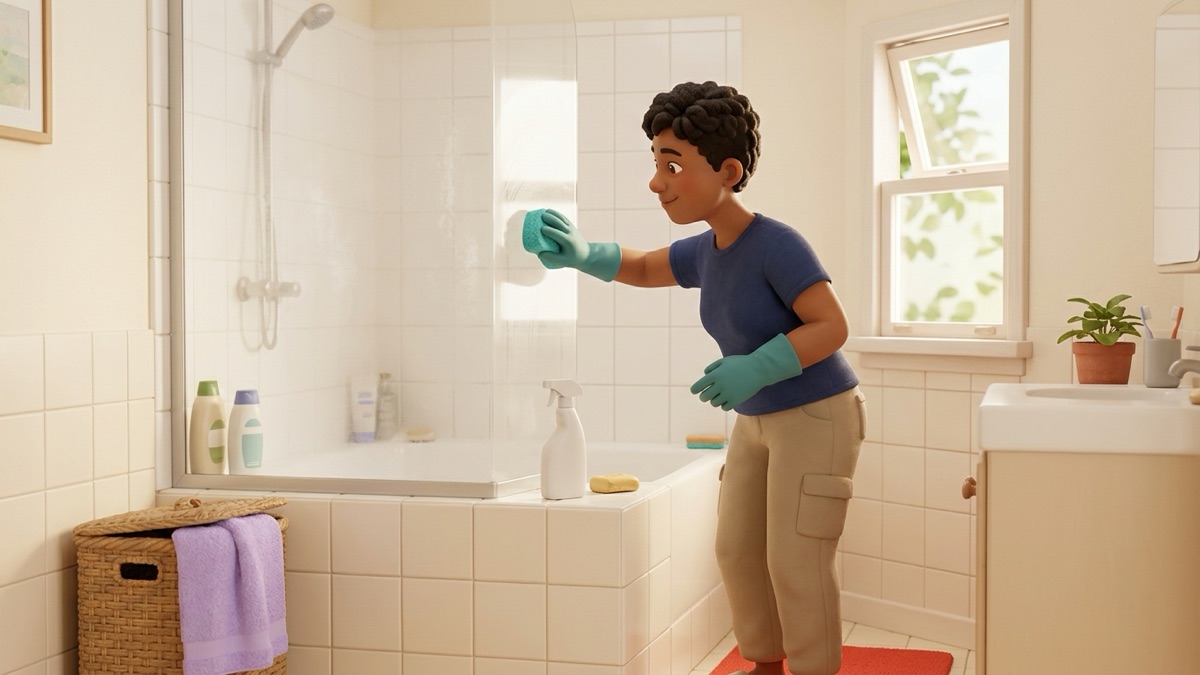
You step into the shower and notice the walls have gone from white to "weathered". A cloudy film, a few water spots, a corner you have decided not to look at. Good news: most of that is soap scum and minerals, and neither one needs an afternoon on your knees.
Quick answer
Open a window or run the fan, rinse the walls with hot water, then use one cleaner made for tile (or warm water with a little dish soap). Leave it for the time on the label, wipe with a non-scratch sponge, rinse well and squeegee dry. Do one wall per 10 minute sprint, and never mix cleaners.
Key takeaways
- The cloudy film on shower tiles is mostly soap scum and hard-water minerals, and warm water softens both.
- One cleaner at a time, always. Follow the label, open a window or run the fan, and never mix bleach with ammonia, vinegar or other acids.
- Let the cleaner sit before you scrub. Waiting does half the work so your arms do not have to.
- Keep vinegar off grout lines and natural stone, and keep bleach for occasional use only.
- A squeegee after each shower is the single best way to skip the big scrub next time.
What is that film on shower tiles?
Mostly two things. Hard water carries dissolved calcium and magnesium, according to the USGS, and when soap meets that calcium it forms what the USGS plainly calls "soap scum." When the water dries on the wall, the minerals stay behind as spots and a dull haze.
That is why a shower can look dull a few days after you cleaned it. It is chemistry, not a character flaw, and the fix is softening and drying, not scrubbing harder.
Dark specks in corners are usually mildew or mold, which we cover below.
What do you need to clean shower tiles?
Less than the cleaning aisle suggests: a non-scratch sponge or microfiber cloth, a long-handled brush with nylon bristles (so you can reach high tiles and the floor without bending), one cleaner, gloves and a squeegee. The Tile Council of North America (TCNA) recommends nylon or plastic scrubbers for tile. Skip steel wool and harsh scouring pads, which can scratch.
What is the best cleaner for shower tiles?
TCNA recommends neutral or mild alkaline cleaners made for tile and grout, and says neutral cleaners are the only ones it recommends for colored grout.
| Cleaner | Good for | Skip it on | Notes |
|---|---|---|---|
| Warm water and a little dish soap | Weekly cleans, most tile, natural stone | Nothing, if you rinse well | The gentlest start |
| Baking soda on a damp sponge | Soap scum on ceramic and porcelain | Natural stone | Mildly abrasive, so rub gently |
| A tile and grout cleaner | Heavier film | Anything its label excludes | Follow the label and its wait time |
| Vinegar | Nothing in this post | Grout lines, marble, limestone, travertine | Never with bleach |
| Chlorine bleach products | Occasional mildew spots | Colored grout, regular use | Never mix, ventilate |
Where those rows come from:
- Baking soda: its maker, ARM & HAMMER, suggests it on a damp sponge for soap scum on tubs, sinks and tiles, and lists ceramic, porcelain, fiberglass and acrylic as suitable.
- Vinegar: TCNA says acidic tile and grout cleaners should only be used by professionals, and the Natural Stone Institute says lemon, vinegar or other acids can dull or etch marble, limestone and travertine.
- Bleach: TCNA says not to use it on tile and grout regularly, because over time it can strip the sealant from grout.
- Natural stone: the Natural Stone Institute says to use a neutral cleaner, stone soap or mild dishwashing liquid with warm water, then rinse and dry.
TidySprint is made by Viral Labs and is not affiliated with any other app, author or brand named here.
Heads up
Use one cleaner at a time and follow the label. Open a window or run the fan, especially in a small bathroom. Never mix bleach with ammonia, vinegar or other acids: the CDC and Poison Control warn the mix can release gases that are dangerous to breathe. Poison Help: 1-800-222-1222.
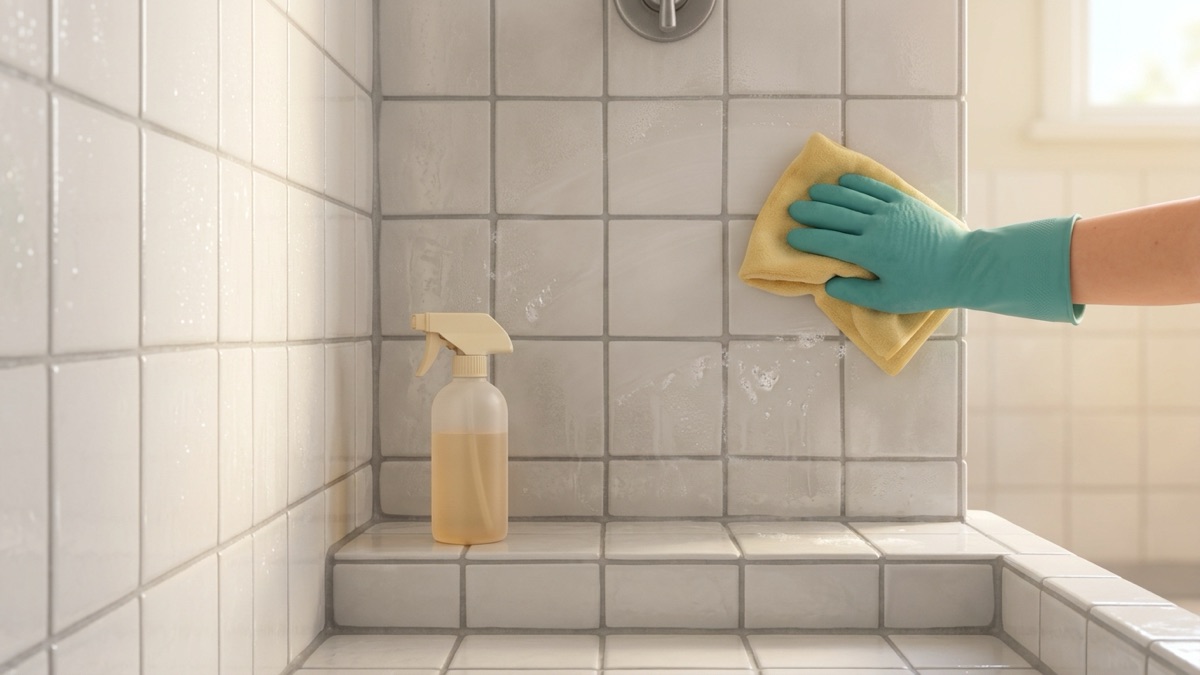
How do you clean shower tiles, step by step?
This is the deeper version, about 20 to 30 minutes for a standard shower, or two or three short sprints with breaks.
1. Get the air moving
Turn on the fan or open a window before any cleaner comes out. Poison Control singles out small rooms like bathrooms: open a window or door and run the exhaust fan.
2. Rinse the walls with hot water
Use the shower head or a cup. Warm water softens soap scum and shows you the real trouble spots.
3. Apply one cleaner, top to bottom
Work on one wall, from the top down, so drips land on parts you have not cleaned yet.
4. Wait
The step everyone skips, and the one that saves your arms. Leave the cleaner for the time its label gives. For a disinfectant, EPA says the surface should stay wet for the whole contact time on the label. (You rarely need one here: the CDC says cleaning with soap or detergent removes most germs, and suggests disinfecting when someone is sick or at higher risk.) Use the wait to line up the bottles.
5. Wipe, then brush the grout lines
Wipe the wall with a non-scratch sponge in small circles. Run a nylon brush along any grout lines that still look dingy. Stuck grout gets its own guide: how to clean tile grout.
6. Rinse well
TCNA says to rinse cleaner off thoroughly and not let the residue dry on tile and grout, or it leaves a film of its own.
7. Squeegee or towel dry
Pull the squeegee down each wall, then wipe the bottom edge.
What is the 10 minute version?
One small burst of energy? Clean the wall you see most. Do another one tomorrow, or next week.
| Minutes | Do this | Why |
|---|---|---|
| 1 | Fan on or window open, rinse one wall with hot water | Softens the film |
| 2 | Apply your one cleaner to that wall | Top to bottom |
| 3 to 5 | Wait, and tidy the bottles while you do | The cleaner works, you rest |
| 6 to 8 | Wipe with a non-scratch sponge, then rinse | Film comes off with the rinse |
| 9 to 10 | Squeegee dry and hang the squeegee back up | Done, and it stays nicer longer |
Try it
Start a 10 minute bathroom sprint in the free cleaning sprint timer. The bathroom deck opens with "open a window or turn on the fan", hands you one tiny task at a time, and lets you skip anything that does not fit today.
How do you stop soap scum from coming back?
- Squeegee after each shower. The Natural Stone Institute says a squeegee after each use minimizes soap scum, and the logic holds for tile too.
- Run the fan while you shower. EPA's mold guide says to run the bathroom fan or open the window when showering.
- Leave the curtain or door open afterward so the shower can dry.
- Rinse the walls for 1 minute at the end of a shower once or twice a week.
Want it on a schedule? The free cleaning schedule maker puts "spray and rinse the shower or tub (window open)" on your bathroom day.
What about mold or mildew on shower tiles?
Small dark spots in corners are common in a warm, damp room. EPA says that if the moldy area is less than about 10 square feet (roughly a 3 foot by 3 foot patch), in most cases you can handle it yourself.
- Protect yourself. EPA suggests gloves, goggles without vent holes and an N-95 respirator.
- Scrub with detergent and water, then dry completely, as EPA advises for hard surfaces. Keep a window open or the fan running.
- Do not caulk over it. EPA says to clean and dry moldy surfaces before you paint or caulk.
- Fix the damp, or the mold will likely come back. Drying the walls after showers helps a lot.
If the patch is bigger than about 10 square feet, keeps coming back behind the tile, or followed a leak or flood, that is a job for a professional, and EPA says to talk to a health professional first if you have health concerns.
A kind wrap-up
One rinsed, wiped and squeegeed wall looks different right away, which makes shower tiles a great small win. Do one wall today if that is what you have. The squeegee will quietly do the rest.
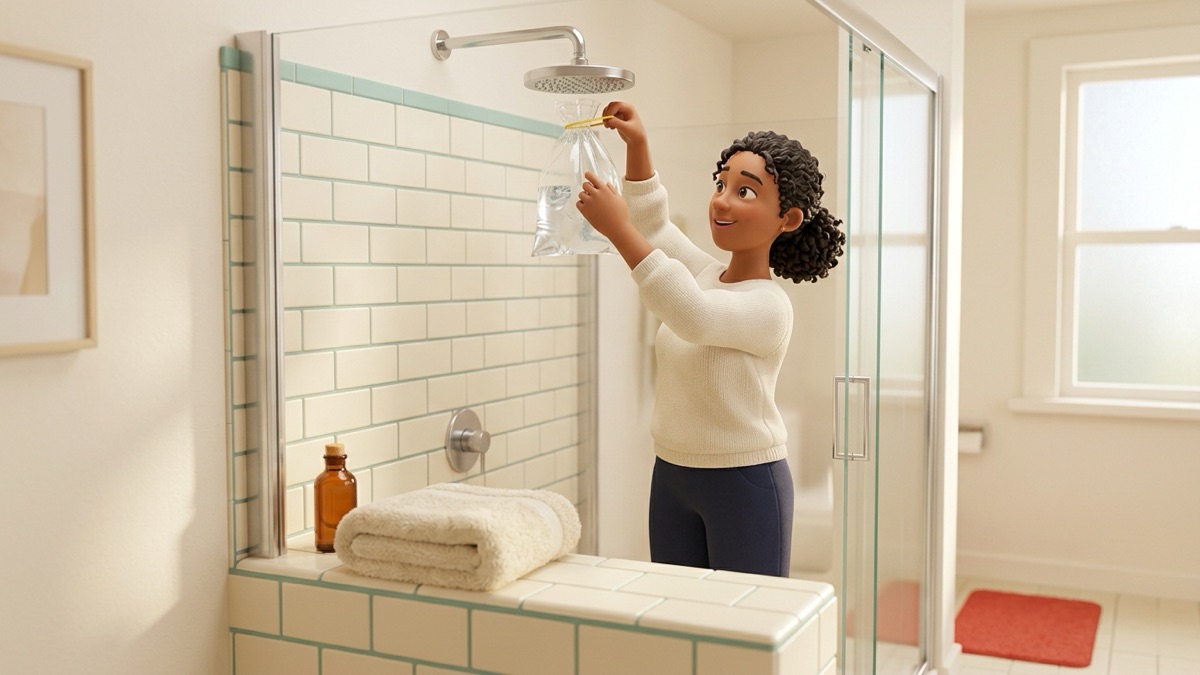
For the rest of the room, pair this with the shower head soak, the quick bathroom cleaning checklist, or the bigger how to clean your house guide with a 10 minute version of every room. The TidySprint app, coming soon, will turn a photo of your bathroom into tiny tasks like these.
TidySprint guides share practical cleaning and routine ideas. They are not medical advice, diagnosis or treatment. If ADHD, depression or anything else is making daily life hard, please talk to a clinician. Using a strong cleaner? Open a window, follow the label, and never mix bleach with ammonia, vinegar or other cleaners.
Questions people ask
How do you clean shower tiles without scrubbing?
To clean shower tiles without scrubbing, let the cleaner do the work. Open a window or run the fan, rinse the walls with hot water, apply one tile cleaner from the top down and leave it for the time on its label. Then wipe with a non-scratch sponge, rinse well and squeegee dry. Do one wall per 10 minute sprint if the whole shower feels like too much, and never mix cleaners.
What is the best thing to clean shower tiles with?
For most ceramic and porcelain tile, warm water with a little dish soap or a neutral cleaner made for tile and grout does the job. Use one product at a time, follow its label, rinse well and dry the walls with a squeegee.
Can you use vinegar on shower tiles?
It is best kept off grout and natural stone. The Tile Council of North America says acidic tile and grout cleaners should only be used by professionals, and the Natural Stone Institute says acids can dull or etch marble, limestone and travertine. Never use vinegar with bleach.
How often should you clean shower tiles?
A quick rinse and squeegee after showers plus a short clean once a week or so keeps most showers in good shape. The Tile Council of North America suggests wiping tile down with clean water at least weekly, or as needed.
How do you stop soap scum from building up?
Squeegee or towel the walls after each shower and run the fan or open a window while you shower. Soap scum forms when soap reacts with the minerals in hard water, so drying the walls is the biggest help.
Is it safe to use bleach on shower tiles?
Occasionally, following the label, with a window open or the fan running and never mixed with anything else. The Tile Council of North America says bleach should not be used on tile and grout regularly because it can strip the sealant from grout over time.
Where these facts come from
- Tile Council of North America, via Why Tile: The Ultimate Guide to Cleaning Ceramic Tile: whytile.com/2020/05/the-ultimate-guide-to-cleaning-ceramic-tile/
- Natural Stone Institute: Care and Cleaning of Natural Stone: www.naturalstoneinstitute.org/consumers/care/
- USGS Water Science School: Hardness of Water: www.usgs.gov/special-topics/water-science-school/science/hardness-water
- ARM & HAMMER: Baking Soda Cleaning Tips: www.armandhammer.com/articles/8-ways-baking-soda-cleans-for-less
- EPA: Six Steps for Safe and Effective Disinfectant Use: www.epa.gov/pesticide-registration/six-steps-safe-effective-disinfectant-use
- CDC: When and How to Clean and Disinfect Your Home: www.cdc.gov/hygiene/about/when-and-how-to-clean-and-disinfect-your-home.html
- EPA: A Brief Guide to Mold, Moisture and Your Home: www.epa.gov/mold/brief-guide-mold-moisture-and-your-home
- CDC: Cleaning and Disinfecting with Bleach: www.cdc.gov/hygiene/about/cleaning-and-disinfecting-with-bleach.html
- Poison Control: Chlorine gas: www.poison.org/articles/chlorine-gas
- Poison Control: Top tips for a safe spring cleaning: www.poison.org/articles/spring-cleaning
Read next

how to clean
How to Clean Baseboards: The 10 Minute Version
adhd cleaning
ADHD Cleaning: A Zero-Shame Guide to a Tidier Home