
Blog decluttering
How to Start Decluttering When You Feel Overwhelmed
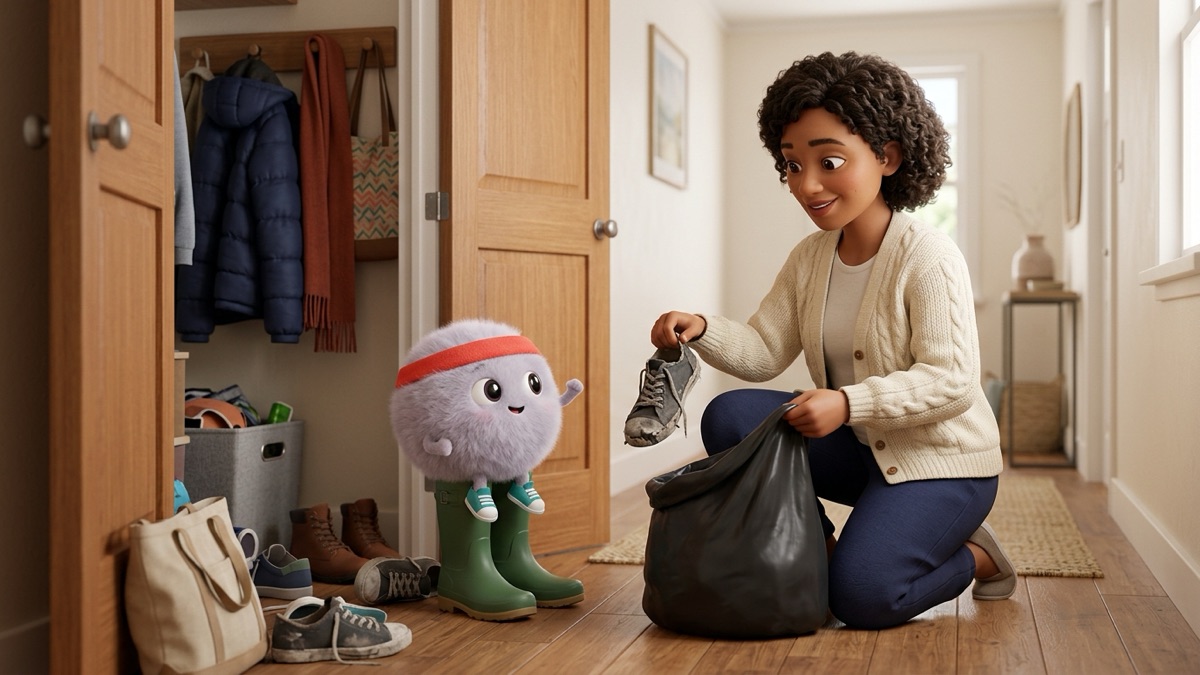
The pile on the chair has become a pile on the floor, and the floor pile has a cousin in the hallway. You open a closet, feel your chest go tight, and close it again. That is not a character flaw. It is what too many decisions at once feels like.
Quick answer
Start smaller than feels useful: one drawer, one shelf or one bag, for 10 minutes. Take out the trash first, since it needs no decisions. Then sort what is left into five boxes (keep, donate, sell, toss, maybe), seal and date the maybe box, and get the outgoing boxes out of the house the same week.
Key takeaways
- Pick a space you can finish in 10 minutes. A finished drawer beats a half-sorted garage.
- Trash first. It is the only category with no decisions, so it builds momentum fast.
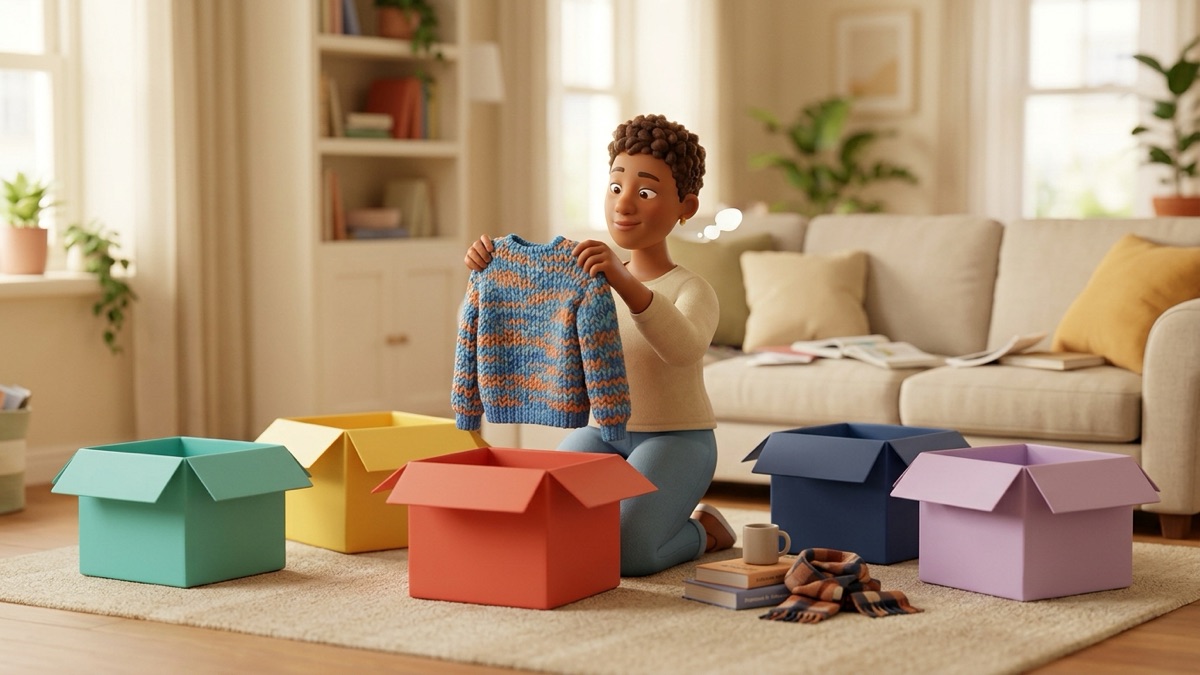
- Use five boxes: keep, donate, sell, toss and maybe. Every item goes in one of them, and nothing goes back "for now."
- The maybe box gets a date. If you never opened it in 30 days (90 for seasonal things), let it go without looking inside.
- Decluttering is not finished until the boxes leave the house.
Why does decluttering feel so overwhelming?
Because every single object is a decision, and decisions are tiring. One junk drawer can hold dozens of tiny questions: is this pen dead, whose key is this, will I ever need this cable. Multiply that by a whole room and your brain does the sensible thing and says "not today."
Clutter also carries feelings. The gift you never liked, the hobby you meant to start, the jeans from a different chapter of your life. Letting go of those can feel like admitting something, so of course they get put off.
If you have ADHD, or relate to it, this may sound very familiar. CHADD, the national ADHD nonprofit, calls getting and staying organized "a real challenge" for people with ADHD and says many adults have trouble with clutter at home and at work and feel overwhelmed or stuck. You are in good company. If you wonder whether ADHD is part of your story, a health care provider or mental health professional can help you find out.
Research on clutter and mood is interesting but limited. In one small study of 60 spouses from dual-income families, wives who described their homes with more words about clutter and unfinished projects had flatter daily cortisol patterns and more depressed mood over the day (Saxbe and Repetti, 2010). It was correlational and based on how people talked about their homes, not a measured amount of stuff, so it cannot show that clutter causes stress. It does match what a lot of people describe: a crowded room can feel heavy.
Where should you start decluttering first?
Somewhere so small it feels almost silly. The goal of the first session is not a clear house. It is one finished spot and the quiet thought "okay, I can do this."
Good first spots have three things in common: they are small, they are yours (no negotiating with anyone), and they hold low-feeling stuff, not letters or baby clothes.
| Start here | Time | Done looks like |
|---|---|---|
| One kitchen drawer | 10 minutes | Only things that work and belong there |
| The bathroom counter | 10 minutes | Daily items only, the rest sorted |
| One shelf or one bag | 5 to 10 minutes | Emptied and sorted into boxes |
| The front seat of the car | 10 minutes | Trash out, loose things bagged |
| The chair that holds clothes | 15 minutes | You can sit on it again |
Leave the garage, the attic and the box of family photos for later. Those are real projects, and they go faster once you have practiced on a drawer.
Tip
Set a timer before you start, and stop when it rings, even if you are on a roll. Ending while it still feels okay makes the next session much easier to start. The free cleaning sprint timer gives you 5, 10, 15 or 20 minutes, one tiny task at a time, with a virtual body double for company.
Why take out the trash first?
Trash is the only category with no decisions attached. Empty wrappers, dried-up pens, old receipts, packaging, junk mail: grab a bag and go. You often see a real difference within a couple of minutes, which is exactly the push a tired brain needs.
The order that works for most people:
- Trash and recycling. No thinking, just bagging.
- Obvious donations. Things you already know you do not want: the shirt that never fit, the second can opener.
- Things that live somewhere else. A mug on the bookshelf goes into a "goes elsewhere" basket. You return everything in the basket at the end, in one trip, instead of wandering off to another room with every item.
- The tricky stuff. Only now do you slow down and decide item by item.
In this order, most of the pile is handled before you reach anything that needs a real decision.
What are the five boxes?
Five boxes (or bags, or laundry baskets, or piles on the floor) give every item somewhere to go, so nothing gets put back where it was. CHADD suggests a simpler version with three boxes: "keep here," "goes somewhere else" and "not sure." The five-box version splits the leaving pile so each box has one clear next step.
| Box | What goes in | Where it goes next | Deadline |
|---|---|---|---|
| Keep | Things you use that have a home | Back in its home, right now | Today |
| Donate | Clean, usable things you do not need | A donation drop-off | This week |
| Sell | Things worth the effort to list | A listing, photo taken today | Listed within 7 days |
| Toss | Broken, expired or used up | Trash, recycling or a hazardous waste drop-off | Next trash day |
| Maybe | Things you cannot decide on yet | Sealed, dated, out of sight | Checked in 30 or 90 days |
How do you decide on the hard items?
Most items decide themselves. The hard ones are usually hard for one of three reasons: guilt ("it was a gift"), hope ("I might use it someday") or money ("it was expensive"). A few questions cut through all three:
- Is it broken, expired or missing a part? If you will not fix it this week, it goes.
- Have you used it in the last 12 months? For seasonal things, think of the last full season.
- Does it have a home? Things without a home are what clutter is made of.
- If it vanished, would you buy it again today? This separates "I like it" from "I feel I should keep it."
- When you look at it, do you feel good or guilty? Guilt is not a reason to keep something. A photo can hold the memory.
Try it
The free declutter decision helper asks these questions one at a time, with Yes, No and Not sure buttons, and gives you a verdict: keep, donate, sell, toss or the maybe box. It keeps a running tally in your browser, so you can watch the "on the way out" number grow. Use it for the tricky items only; trash does not need a quiz.
What goes in the maybe box, and when do you open it?
The maybe box is for items that stall you. Instead of standing in the hallway holding a lamp for ten minutes, you put the lamp in the maybe box and keep going. That is the whole trick: it protects your momentum.
It only works with a date. Seal the box, write the date on it, and put it somewhere out of sight, like a high closet shelf. Set a reminder for 30 days, or 90 days for seasonal things like a winter coat. When the reminder comes, ask one question: did you open the box? If you did not, donate it without looking inside. If you went looking for one thing, take that thing out and let the rest go.
The decision helper can make a 30 day calendar reminder for you. Our full guide to the maybe box covers what should and should not go in it.
Where do things go when they leave?
Decluttering is not done when the boxes are full. It is done when they are out of the house. Boxes that sit by the door for a month are just clutter with better organization.
- Donate: put the bag in your car or by the front door the same day, and drop it off on your next errand. Check what your local donation center accepts before you go.
- Sell: take the photo while the item is in your hand. If it is not listed within a week, or has not sold in 30 days, it moves to the donate bag.
- Recycle: check your city's rules, since they vary from place to place.
- Hazardous leftovers: the EPA says leftover paints, cleaners, oils, batteries and pesticides can contain hazardous ingredients and need special care. They do not go down the drain, and some do not belong in the trash either. Never combine leftovers into one container. Your local solid waste or environmental agency can tell you about drop-off days, since the rules are set at the state and local level.
- Batteries: the EPA says never to put lithium-ion batteries in household trash or recycling bins, because they can start fires. Tape the ends or bag each one separately and take them to a battery drop-off.
- Old phones and laptops: delete your personal information first, then take them to an electronics donation or recycling program. The EPA notes that manufacturers and retailers offer several options.
- Old medicines: a drug take-back location (often a pharmacy or police station) or a prepaid mail-back envelope is the best option for most unused medicines, according to the U.S. Food and Drug Administration.
Fun fact
In 2018, the most recent year the EPA has full figures for, the US generated 17 million tons of textile waste, and discarded clothing was the main source. About 11.3 million tons went to landfills. Clean, wearable clothes are worth the trip to a donation bin.
The 10 minute version
Short on time or energy? Here is the whole method, shrunk:
- Minute 0: grab one trash bag and one donate bag. Pick one drawer or one shelf.
- Minutes 1 to 3: trash only. Bag anything broken, empty or expired.
- Minutes 3 to 7: pull out anything you already know you do not want and drop it in the donate bag.
- Minutes 7 to 9: put back what stays, neatly enough that you can see it all.
- Minute 10: tie both bags. Trash goes out now. The donate bag goes in the car or by the door.
That is a real session, not a warm-up. Do it once a day for a week and seven small spaces are done without a single marathon.
How do you stop the clutter from coming back?
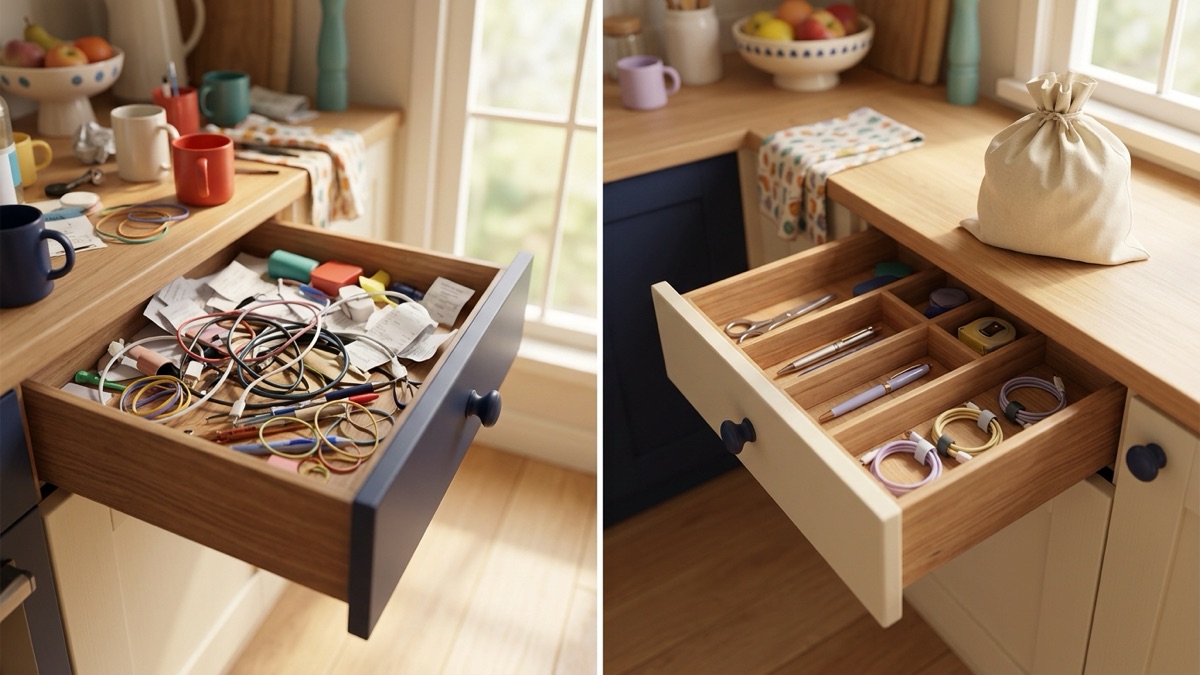
Clutter comes back when things arrive faster than they leave, or when things have nowhere to live. A few small habits handle both:
- Give everything a home. If you keep something, decide where it lives. "On the chair for now" is not a home.
- Keep a donate bag open. A bag in a closet where you drop things the moment you are done with them turns decluttering into a background habit.
- One in, one out. When a new mug comes home, an old one leaves. Treat it as a gentle check, not a strict rule.
- Do a short nightly pickup. CHADD suggests a 10-minute pickup each night. Put away what you took out, return strays to their homes, and stop when time is up.
- Watch your landing spots. Every home has a chair, a counter or a corner that collects things. Clear it more often than the rest; our guide to doom piles is all about those.
Expect some creep back. That is normal, not failure. A 10 minute reset now and then is part of the method, not a sign it did not work.
When is it more than clutter?
Most clutter is just life: busy weeks, low-energy stretches, too many things coming in. Sometimes, though, it is something different.
The American Psychiatric Association describes hoarding disorder as persistent difficulty parting with possessions because of a perceived need to save them. Getting rid of things causes distress, and the clutter gets in the way of using living spaces. It is a mental health condition, not a messy room, and timers, boxes and apps are not the right help for it. The APA says early help matters and that cognitive behavioral therapy has been shown in randomized controlled trials to be an effective treatment.
There is also a middle ground. The Institute for Challenging Disorganization uses the term chronic disorganization for disorganization that persists over a long time, frequently undermines quality of life, and keeps coming back despite repeated self-help attempts. If that sounds familiar, a trained professional organizer may help; our guide to decluttering services explains what they do and how to find one.
Heads up
If letting go of things causes you real distress, or rooms in your home have become hard to use, please talk to a health care provider or mental health professional. Asking for that help is a normal, brave thing to do.
Where should you go from here?
Once one drawer is done, pick the next small thing. A few good next steps:
- The room-by-room decluttering checklist lists easy wins in every room, easiest first.
- How to declutter your room breaks a bedroom into five short sprints.
- The 30 day declutter challenge gives you one tiny task a day.
The TidySprint app, coming soon, will turn a photo of a cluttered spot into a short list of tiny tasks and run the sprint with you.
The takeaway
You do not need a free weekend, a label maker or a new personality. You need one drawer, one bag and 10 minutes. Trash first, then five boxes, a dated maybe box, and everything that leaves actually leaves. Then stop, and do it again another day.
TidySprint guides share practical cleaning and routine ideas. They are not medical advice, diagnosis or treatment. If ADHD, depression or anything else is making daily life hard, please talk to a clinician. Using a strong cleaner? Open a window, follow the label, and never mix bleach with ammonia, vinegar or other cleaners.
Questions people ask
Where should I start decluttering when everything feels like too much?
Start with the smallest space you can finish in 10 minutes, such as one drawer, one shelf or one bag. Take out the trash first, since it needs no decisions, then sort the rest into keep, donate, sell, toss and maybe.
What are the five boxes for decluttering?
Keep, donate, sell, toss (or recycle) and maybe. Every item goes into one of them. The maybe box is sealed, dated and checked again in 30 days, or 90 days for seasonal things.
How long should a decluttering session be?
Shorter than you think. CHADD suggests sessions of 30 to 60 minutes, or 10 to 15 minutes if longer feels frustrating. A 10 minute session you finish is worth more than a whole weekend you keep putting off.
How do I stop clutter from coming back?
Give each thing a home, keep a donate bag open in a closet, and do a short pickup each evening. When something new comes in, check whether something similar can go out.
Is clutter the same as hoarding disorder?
No. Hoarding disorder is a mental health condition in which parting with things causes real distress and clutter makes rooms hard to use. A mental health professional can help, and asking for that help is nothing to be ashamed of.
Where these facts come from
- CHADD: Organizing the Home and Office Space: chadd.org/for-adults/organizing-the-home-and-office-space/
- Saxbe and Repetti 2010, No Place Like Home (Personality and Social Psychology Bulletin), Crossref record: api.crossref.org/works/10.1177/0146167209352864
- American Psychiatric Association: What Is Hoarding Disorder?: www.psychiatry.org/patients-families/hoarding-disorder/what-is-hoarding-disorder
- Institute for Challenging Disorganization: What is chronic disorganization?: www.challengingdisorganization.org/
- EPA: Household Hazardous Waste: www.epa.gov/hw/household-hazardous-waste-hhw
- EPA: Used Household Batteries: www.epa.gov/recycle/used-household-batteries
- EPA: Electronics Donation and Recycling: www.epa.gov/recycle/electronics-donation-and-recycling
- EPA: Textiles, Material-Specific Data: www.epa.gov/facts-and-figures-about-materials-waste-and-recycling/textiles-mater
- U.S. Food and Drug Administration: Disposal of Unused Medicines: www.fda.gov/drugs/safe-disposal-medicines/disposal-unused-medicines-what-you-sho