
Blog speed cleaning
Speed Cleaning: How to Clean Your House Fast, No Burnout
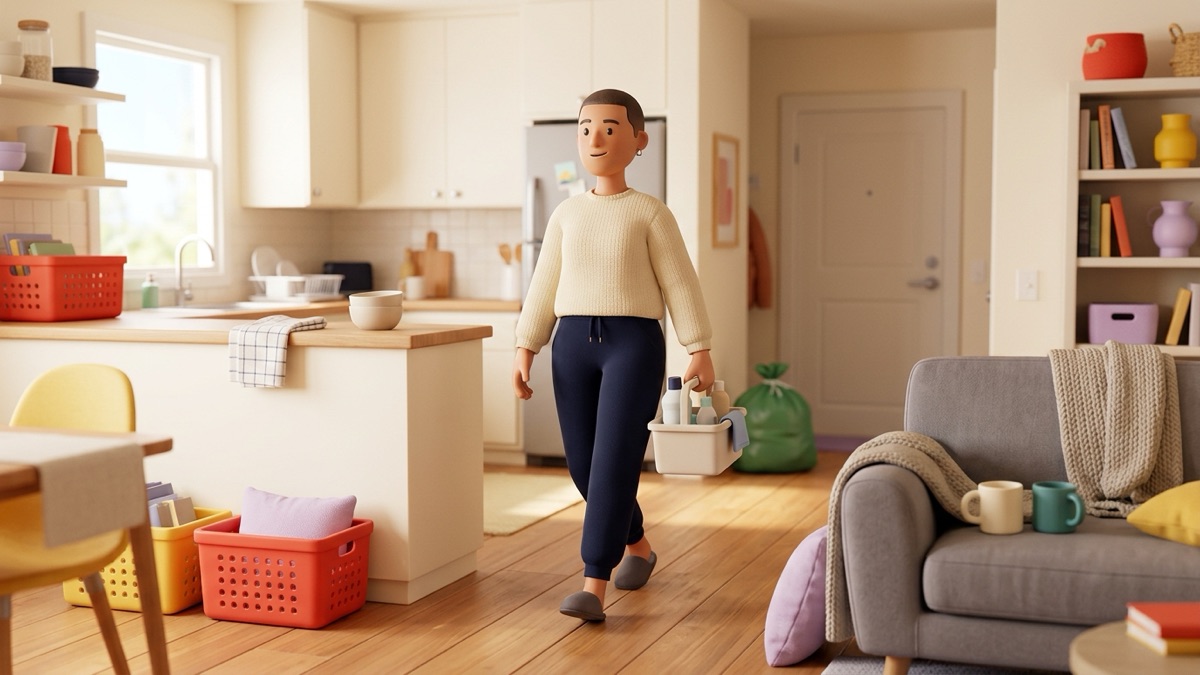
Someone just texted "on my way." Or it is Sunday evening, and the new week is about to land on top of last week's mess. You do not need a spotless home. You need it to feel okay again, fast, without losing the whole day or running out of steam halfway through the bathroom.
Quick answer
Speed cleaning means cleaning in a set order so you never redo work. Pick up first, carry everything in one caddy, work top to bottom and left to right, and do the floors last. Clean what people see first, skip the deep jobs, and work in short timed sprints with breaks instead of one long marathon.
Key takeaways
- Pick up before you clean. Clutter makes every other job slower.
- Work top to bottom and left to right in each room, so nothing gets cleaned twice or missed.
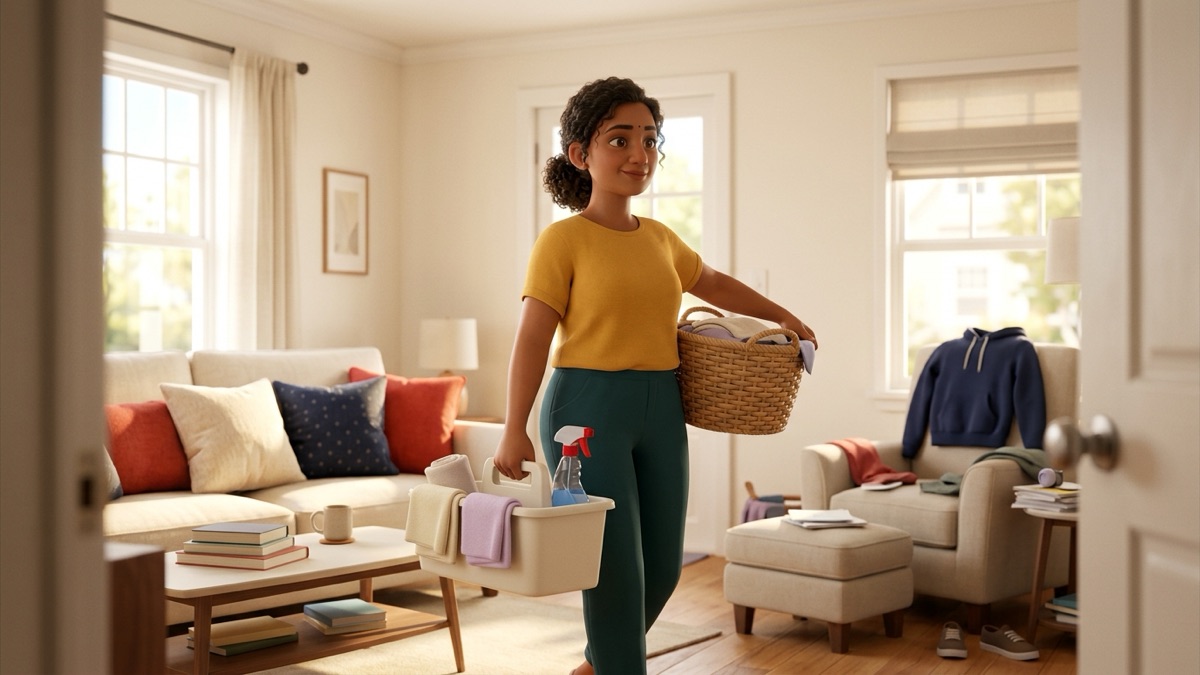
- Carry all your supplies in one caddy, so you never walk back for a cloth.
- Clean what shows first: the entry, the kitchen counter, the bathroom sink, the floor people walk on.
- Work in 10 to 20 minute sprints with real breaks. A plan you can repeat beats one heroic Saturday.
What is speed cleaning?
Speed cleaning is not scrubbing harder or rushing around. It is cleaning in an order where each step sets up the next one, and nothing undoes what you just finished. You dust before you vacuum, you clear a counter before you wipe it, and you do all the floors in one pass at the end.
It is also not deep cleaning. Speed cleaning is about a home that looks and feels reset: surfaces clear, dishes handled, bathroom fresh, floors swept where people walk. The grout, the oven and the back of the fridge can wait for another day.
The good news is that the rules are few. Once they are a habit, you stop thinking about them, and that is the real speed boost: fewer decisions, more done.
Why do long cleaning sessions end in burnout?
The classic plan is to "do the whole house on Saturday." It starts strong, stalls around hour two, and the last rooms get nothing. Next time, the memory of that Saturday makes starting even harder.
Short, timed sessions are easier to start and easier to stop. CHADD, the ADHD organization, suggests splitting organizing work into short sessions of 30 to 60 minutes, or 10 to 15 minutes if longer would get frustrating, and using a timer in 15 minute blocks with breathers in between. That advice was written for organizing, and it fits cleaning just as well.
Starting and sticking with chores is hard for a lot of people, and for some there is more going on. NIMH lists trouble organizing tasks, managing time and remembering daily activities such as chores among the signs of inattention in ADHD. If that sounds familiar and it gets in the way of daily life, a health care provider or mental health professional can help you work out what is going on. The tips here are about cleaning, nothing more.
What are the rules of speed cleaning?
Five rules do most of the work. Learn these and every plan below makes sense.
1. Pick up first, clean second
The American Cleaning Institute (ACI), which represents the US cleaning products industry, puts it plainly in its fast cleaning guide: "Start by picking up." Its routine guide adds that having lots of stuff around makes cleaning harder and gives dust and allergens places to collect. Wiping around a pile of mail takes longer than moving the mail and wiping once.
So the first minutes of any speed clean are a walk-through with two things: a trash bag and a basket. Trash goes in the bag. Anything that lives in another room goes in the basket. You put the basket items away at the end, one trip per room, instead of walking a single sock across the house.
2. Carry one caddy
ACI suggests keeping cleaning supplies in a portable caddy, and for speed cleaning it matters more than any product. Every trip back to the kitchen for a cloth is a chance to get distracted by your phone, the fridge or a drawer you suddenly need to sort.
| In the caddy | Used for | Keep in mind |
|---|---|---|
| 4 to 6 microfiber cloths | Dusting, wiping, drying | One per room, so you never rinse mid-sprint |
| One all-purpose cleaner | Counters, tables, sinks | Check the label says it suits your surfaces |
| Your bathroom cleaner | Sink, tub, the outside of the toilet | Use it on its own, never mixed with anything |
| A duster or dry cloth | Shelves, TV stand, lamp bases | Top to bottom, before the floor |
| Spare trash bags | The first walk-through | Tuck them in the bottom |
| A timer | Sprints and breaks | Your phone, or the free sprint timer |
The basket and the vacuum travel separately. Everything else lives in the caddy, and the caddy goes back to one spot when you finish, so next time starts faster.
3. Top to bottom, left to right
ACI calls it "the top-to-bottom, left-to-right rule," and says the point is that no surface gets overlooked. Top to bottom means dust and crumbs fall onto places you have not cleaned yet, never onto places you already have. ACI's own example: dust before you vacuum, so you do not have to go back and clean somewhere twice.
Left to right means you move around the room in one direction, starting at the door and ending back at the door. No zigzagging, and no wondering whether you already did the bookshelf.
4. Let products sit while you do something else
ACI suggests pretreating surfaces with a product that needs a little time to work, like toilet cleaner. Put it on first, go wipe the sink and the mirror, and by the time you come back, the product has done part of the job for you. The label tells you how long it needs.
Heads up
Use one cleaner at a time and follow the label. Open a window or run the fan when you use a bathroom cleaner or anything strong. Never mix bleach with ammonia (found in many glass cleaners), vinegar or other acids (including some toilet bowl cleaners): the mix can release gases that are dangerous to breathe. If someone breathes in fumes, get to fresh air and call Poison Help at 1-800-222-1222.
5. Clean what shows first
ACI's advice for people selling a home works for everyone: look at each room the way a visitor would, notice what catches the eye first, and start there. Usually that is the entry, the main counter, the sink, a table and the stretch of floor people walk on. A clear counter and a made bed change how a room feels far more than a dusted picture frame.
What order should you clean the house in?
For a whole-home speed clean, this order keeps you from doubling back:
- Trash walk. One bag, every room, about 2 minutes.
- Basket walk. Things that belong elsewhere into the basket, and every cup and mug to the kitchen.
- Pretreat the bathroom. Toilet cleaner in, window open or fan on, then walk away.
- Kitchen. Dishes, then counters top to bottom, then the sink. ACI suggests giving the kitchen and bathroom priority, since they take the most time.
- Bathroom. Mirror, sink, then the toilet you pretreated.
- Living areas. Cushions, blanket, coffee table, a quick dust.
- Bedrooms. Pull the covers up (that counts as a made bed) and clear the floor.
- Floors, all at once. Vacuum or sweep the main paths, from the far end of the home toward the door.
- Empty the basket one room at a time, then take the trash out.
What can you skip when time is short?
Skip anything nobody will notice today. That is not cutting corners. It is choosing which corners matter this time.
Skip for now:
- Baseboards, windows and the tops of door frames
- Inside the fridge, the oven and the microwave
- Folding laundry (put the clean basket in the bedroom and close the door)
- Organizing drawers, closets and paperwork (stack the papers into one neat pile)
- Mopping every floor (spot wipe the sticky patch instead)
- Dusting anything above eye level
Do not skip:
- Dishes with food on them, and the kitchen trash
- The toilet and the bathroom sink
- One clear place to sit and one clear spot to put a drink down
- A clear path from the front door
Tip
Closing a door is a real speed cleaning move. If one room is not getting done today, close it and give those minutes to the rooms people will actually use.
The 15 minute whole-home plan
This is a reset for a small home or apartment, or the shared rooms of a bigger one. One sprint, no break needed.
| Minutes | Where | What to do | Done when |
|---|---|---|---|
| 0 to 2 | Everywhere | Trash walk with one bag | Bag tied and by the door |
| 2 to 5 | Everywhere | Basket walk, cups and plates to the kitchen | Surfaces mostly clear |
| 5 to 9 | Kitchen | Dishes in the dishwasher or soaking, wipe counters and sink | Counter clear and dry |
| 9 to 12 | Bathroom | Wipe sink and tap, brush the toilet bowl, fresh towel | Sink shines, towel hung |
| 12 to 15 | Living room | Clear the coffee table, plump cushions, vacuum the main path | You can sit down |
The 30 minute whole-home plan
Thirty minutes is two 14 minute sprints with a 2 minute breather in the middle, close to CHADD's idea of 15 minute blocks with breathers. It covers more ground and ends with the floors.
| Minutes | Where | What to do | Done when |
|---|---|---|---|
| 0 to 3 | Everywhere | Trash walk, open a window, pretreat the toilet | Bag full, cleaner working |
| 3 to 6 | Everywhere | Basket walk, all dishes to the kitchen | Nothing in the wrong room |
| 6 to 14 | Kitchen | Dishes, counters top to bottom, stovetop, sink, table | Counter and sink clear |
| 14 to 16 | Breather | Water, sit down, stretch | Ready for round two |
| 16 to 21 | Bathroom | Mirror, sink, toilet, towels, empty the bin | It looks and smells fresh |
| 21 to 25 | Living room and bedrooms | Cushions, blanket, coffee table, covers pulled up | Sofa and beds look calm |
| 25 to 29 | Floors | Vacuum or sweep main paths, far end toward the door | Paths clear |
| 29 to 30 | Everywhere | Empty the basket, trash out | Done. Really done |
Why do sprints and breaks beat marathons?
A sprint has an end you can see, and that changes how starting feels. "Clean the house" has no finish line. "Fifteen minutes on the kitchen" does. When the timer rings, you are allowed to stop, and stopping on time is what makes next time easier to start.
The best-known version of this is the 20/10 method from Unf*ck Your Habitat: 20 minutes of cleaning, then a 10 minute break, repeated. UfYH builds its system on 20/10s because breaks matter and it wants people to avoid cleaning marathons. We cover how many rounds to do, what to do on the break and the shorter versions in the 20/10 cleaning method.
TidySprint is made by Viral Labs and is not affiliated with any other app, author or brand named here.
On weeknights you may not want a plan at all. The 10 minute tidy is a nightly reset that keeps every future speed clean short.
Try it
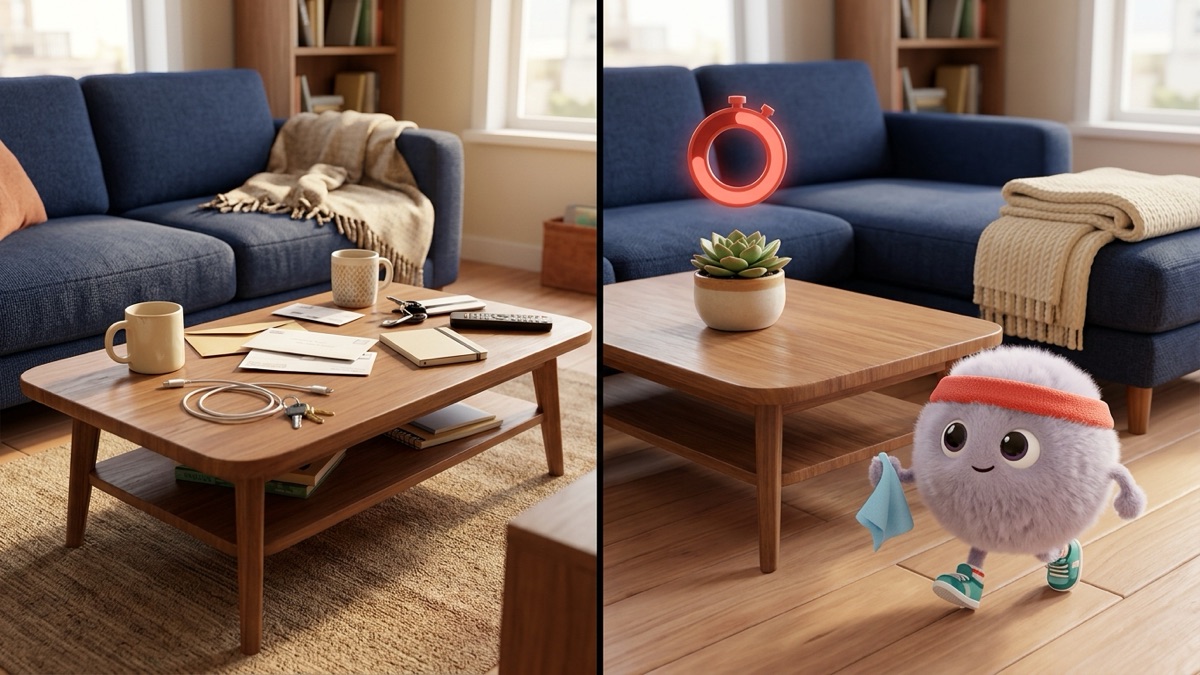
Open the free cleaning sprint timer and pick Whole home. It shows one tiny task at a time ("Walk through with a bag and collect 10 pieces of trash"), counts down with a ring, and Zip, our dust bunny body double, cleans alongside you. Choose 15 or 20 minutes, or the 20/10 cycle for a bigger reset with breaks built in.
The 10 minute version
No time for a plan? Do this, then stop:
- 2 minutes: trash walk with one bag.
- 3 minutes: every cup, plate and stray thing into the kitchen or the basket.
- 3 minutes: wipe the kitchen counter and the sink.
- 2 minutes: wipe the bathroom sink, hang a fresh hand towel, close the shower curtain.
Ten minutes will not clean the house. It will make it feel noticeably calmer, which is often exactly what you needed.
What if speed cleaning is not enough?
Sometimes the problem is not speed. If one room has been building up for months, a single sprint can feel pointless, even though it is not. Start with how to clean your room fast for one room at a time, or emergency cleaning when guests are already on the way. On days when you have almost nothing left, cleaning with no energy shrinks every step further. For the bigger picture, our ADHD cleaning guide covers why cleaning can be so hard to start and what helps.
The TidySprint app, coming soon, will turn a photo of a messy room into a short list of tiny tasks and run the sprint with you.
The takeaway
Speed cleaning is not about moving faster. It is about moving once: pick up, carry one caddy, go top to bottom and left to right, do the visible things first and the floors last. Keep it to short sprints with real breaks, skip what nobody will notice, and stop when the timer stops. The home does not have to be perfect. It just has to feel like yours again.
TidySprint guides share practical cleaning and routine ideas. They are not medical advice, diagnosis or treatment. If ADHD, depression or anything else is making daily life hard, please talk to a clinician. Using a strong cleaner? Open a window, follow the label, and never mix bleach with ammonia, vinegar or other cleaners.
Questions people ask
How do you speed clean a house?
Pick up first with a trash bag and a basket, then clean each room top to bottom and left to right with all your supplies in one caddy. Do the kitchen and bathroom early, the floors last, and work in short timed sprints.
How long does speed cleaning take?
A small home, or the shared rooms of a bigger one, can get a real reset in 15 to 30 minutes. For more than that, work in rounds, such as 20 minutes of cleaning and a 10 minute break, rather than one long session.
What should I clean first when I am short on time?
Trash and dishes first, because they change how a home looks fastest. Then do what visitors see first: the entry, the kitchen counter, the bathroom sink and one clear place to sit.
Is it faster to clean room by room or task by task?
A mix usually works best. Tidy and wipe room by room so each space gets finished, then vacuum or sweep every floor in one pass at the end, so the vacuum only comes out once.
Does speed cleaning work if I have ADHD?
Many people find short, timed sessions with breaks easier to start, and CHADD suggests timers and short sessions for organizing. It is a cleaning routine, not medical care, so talk to a health care provider if ADHD is making daily life hard.
Where these facts come from
- American Cleaning Institute: Fast and Efficient Home Cleaning Guide: www.cleaninginstitute.org/cleaning-tips/clean-home/fast-and-efficient-home-clean
- American Cleaning Institute: Home Cleaning Routine: www.cleaninginstitute.org/cleaning-tips/clean-home/home-cleaning-routine
- American Cleaning Institute: Clean House Tips for Home Sellers: www.cleaninginstitute.org/cleaning-tips/everyone/clean-house-tips-home-sellers
- CHADD: Organizing the Home and Office Space: chadd.org/for-adults/organizing-the-home-and-office-space/
- NIMH: Attention-Deficit/Hyperactivity Disorder, What You Need to Know: www.nimh.nih.gov/health/publications/attention-deficit-hyperactivity-disorder-wh
- Unf*ck Your Habitat: What's a 20/10?: www.unfuckyourhabitat.com/whats-a-2010/
- CDC: Cleaning and Disinfecting with Bleach: www.cdc.gov/hygiene/about/cleaning-and-disinfecting-with-bleach.html
- Poison Control: Chlorine gas: www.poison.org/articles/chlorine-gas
- PoisonHelp.org (America's Poison Centers): poisonhelp.org/