Blog decluttering
How to Declutter Your Room in Short Sprints
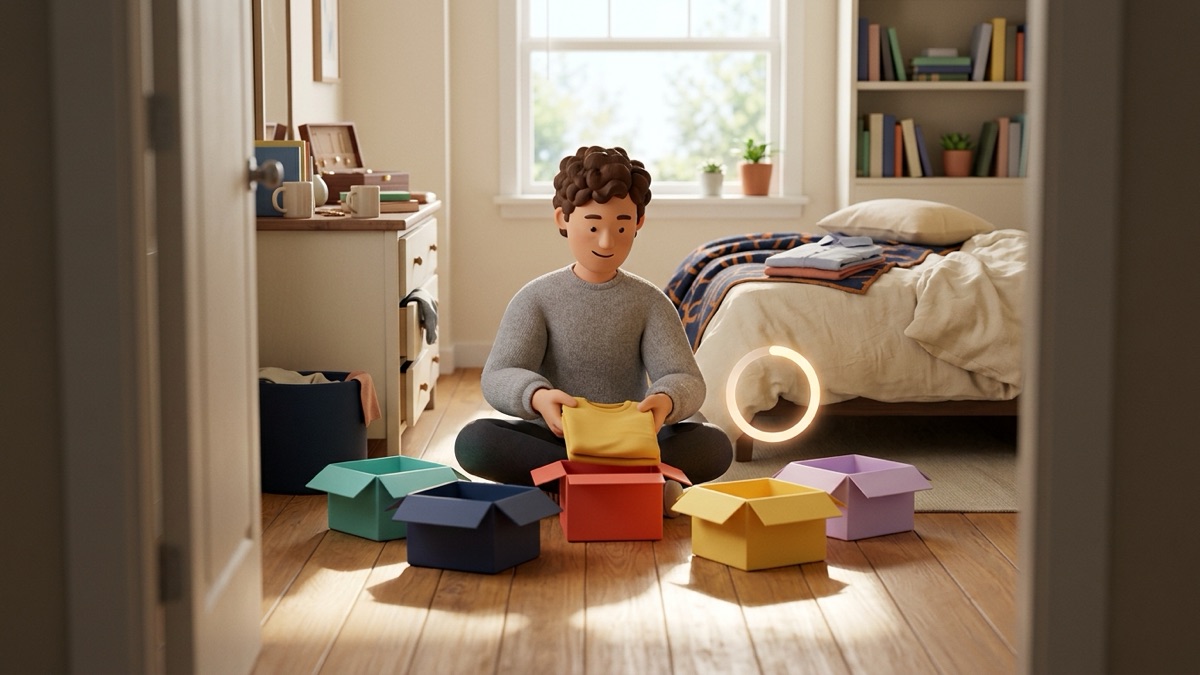
Your room is where you are supposed to rest, and right now it mostly reminds you of everything you have not done. Clothes on the chair, cups on the nightstand, a floor you navigate by memory. The good news: a bedroom breaks into small zones very neatly.
Quick answer
Declutter your room one zone per short sprint: floor first, then bed, nightstand, dresser top and closet floor. Bring five boxes (keep, donate, sell, toss, maybe) plus a "goes elsewhere" basket. Decide each item in seconds, maybe-box the hard ones, and stop when the timer rings.
Key takeaways
- Split the room into five zones and give each one its own sprint of 10 to 15 minutes.
- Start with the floor. It gives the biggest visible change and makes everything else easier.
- Five boxes plus a "goes elsewhere" basket mean nothing gets put back "for now."
- Hard decisions go in the maybe box so one item never stalls a sprint.
- A short nightly pickup and a hamper where clothes really land keep the room clear.
What do you need before you start?
Less than you think. You do not need new bins or a label maker. Grab:
- Five boxes or bags: keep, donate, sell, toss and maybe.
- A "goes elsewhere" basket for mugs, towels and anything that lives in another room.
- A timer. Your phone works, or use the free cleaning sprint timer, which has a bedroom task deck and a virtual body double.
That is it. If you want the full kit, our list of decluttering supplies keeps it short.
How do you split a bedroom into sprints?
One zone per sprint. Each has a clear "done" line, so you can stop without feeling like you left a mess halfway.
| Sprint | Zone | Time | Done looks like |
|---|---|---|---|
| 1 | Floor | 15 minutes | You can see the floor and walk across it |
| 2 | Bed | 10 minutes | Bed clear, and made if you like |
| 3 | Nightstand | 10 minutes | Top holds nightly things only |
| 4 | Dresser top | 10 minutes | Three or four things you chose on purpose |
| 5 | Closet floor | 15 minutes | Shoes paired, nothing loose on the floor |
CHADD suggests short sessions of 30 to 60 minutes, or 10 to 15 minutes if longer feels frustrating. Five small sprints fit either way: do them all in one afternoon with breaks, or one a day.
Sprint 1: the floor
Floor first, because it is the biggest visual win and it makes the room safer to move around in.
- Trash sweep. Wrappers, receipts, empty bottles. Bag them all.
- Dishes and strays. Cups and plates go straight to the "goes elsewhere" basket.
- Laundry. Dirty clothes into the hamper. Clean clothes onto the bed to fold later (you will clear the bed next).
- Everything else. One item at a time, into one of the five boxes.
Sprint 2: the bed
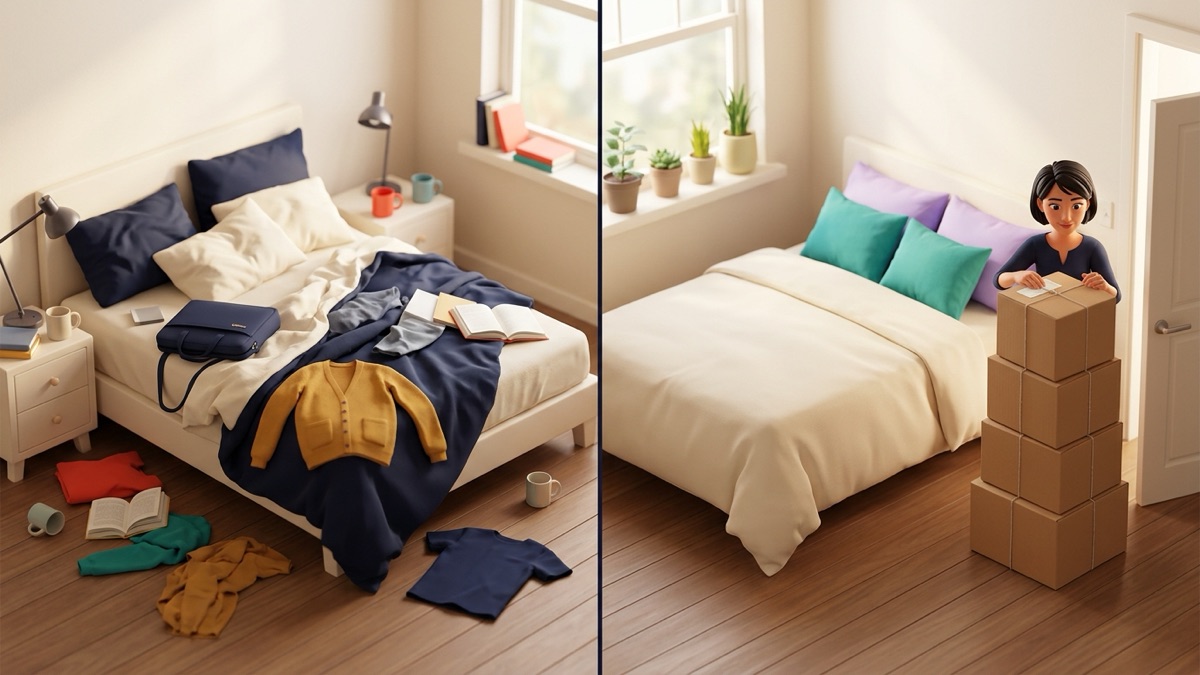
The bed probably just collected the floor's clean clothes. Fold or hang what you wear, and put clothes you avoid wearing in the donate box. Anything else on the bed gets a box. If you have energy left, make the bed or change the sheets; a made bed makes the whole room look finished.
Sprint 3: the nightstand
Clear the top completely, then put back only what you use every night: a lamp, a book, a glass of water, your charger.
Then open the drawer. It is often the room's junk drawer in disguise. Toss dead pens, old receipts and wrappers. Pull out chargers and cables for devices you no longer own. The EPA says to delete your personal information from old phones and devices before you donate or recycle them.
Heads up
Loose batteries turn up in nightstands all the time. The EPA says lithium-ion and button batteries should never go in household trash or recycling bins, because they can start fires. Tape the ends or bag each one separately and take them to a battery drop-off.
Sprint 4: the dresser top
Flat surfaces are landing spots, and the dresser is the biggest one in the room. Take everything off, then put back only three or four things you actually like or use daily. A small tray for jewelry, keys or coins gives the little stuff a home so it does not spread.
Everything else goes into a box: keep (with a real home), donate, sell, toss or maybe.
Sprint 5: the closet floor
Only the floor, not the whole closet. Pair shoes and let the singles go. Empty old bags. Pick up anything that fell off a hanger and decide on it. A full closet edit is a bigger project; our guide to decluttering clothes covers it when you are ready.
Bonus sprints: under the bed and the chair
Two more spots, if you have the energy another day.
- Under the bed: pull everything out onto the floor. If you forgot you owned it, that is useful information: donate or toss it. Whatever stays should be things you store on purpose, like spare bedding, in a box or bag you can slide out easily.
- The chair: the famous clothes chair is not a character flaw, it is a sign that clothes need a closer home. Sort the pile into hamper, closet and donate, then put a hook or basket right where the pile used to grow.
How do you decide fast?
Most items need a few seconds, not a debate. Ask:
- Is it broken, expired or trash? Toss.
- Does it belong in another room? Goes elsewhere basket.
- Do I use it and does it have a home here? Keep, and put it there now.
- Would I buy it again today? If not, donate or sell.
- Still stuck? Maybe box. Seal it, date it and check it in 30 days (90 for seasonal things). Our guide to the maybe box explains the rules.
Try it
For the items that stop you, open the free declutter decision helper on your phone. A few yes or no questions give you a verdict (keep, donate, sell, toss or maybe box), and a running tally shows how much is leaving.
The 10 minute version
No energy for five sprints? Do this one:
- Set a timer for 10 minutes.
- Trash first: one bag, everything that is clearly trash (3 minutes).
- Dishes and strays into the "goes elsewhere" basket, then carry it out (3 minutes).
- Dirty laundry into the hamper (2 minutes).
- Clear the nightstand top down to nightly things (2 minutes).
The room will not be finished, but it will feel noticeably lighter, and that often makes tomorrow's sprint easier to start.
What if you share the room?
Declutter your own things and your own side only. Other people's stuff is their decision, even when it is clearly clutter to you. Agree on shared zones (the floor, the dresser top) and what "clear" means for each. If you share a closet, split the closet floor by side and each do your own half.
How do you keep your room clear?
Decluttering once is the big lift. Keeping it clear is a few small habits:
- Put the hamper where clothes actually land. If the chair is the landing spot, the hamper goes next to the chair.
- Do a short nightly pickup. CHADD suggests a 10-minute pickup each night. Clothes away, cups out, surfaces clear.
- Keep a donate bag in the closet. Drop things in the moment you know you are done with them.
- Give small stuff a tray or a drawer. Loose things spread; contained things stay put.
- Reset one zone when it slips. The floor or the dresser top, not the whole room.
Our guide to how to keep your room clean has more tiny habits.

For a room-by-room list beyond the bedroom, see the decluttering checklist. If the whole house feels like too much, start with our guide to how to start decluttering when you feel overwhelmed.
The TidySprint app, coming soon, will turn a photo of your room into a short list of tiny tasks and run the sprint with you.
The takeaway
A bedroom is five small jobs, not one big one. Floor, bed, nightstand, dresser top, closet floor: one sprint each, five boxes, fast decisions, and the maybe box for the hard stuff. Stop when the timer stops, and let tonight's pickup do the rest.
TidySprint guides share practical cleaning and routine ideas. They are not medical advice, diagnosis or treatment. If ADHD, depression or anything else is making daily life hard, please talk to a clinician. Using a strong cleaner? Open a window, follow the label, and never mix bleach with ammonia, vinegar or other cleaners.
Questions people ask
Where do I start when decluttering my room?
Start with the floor. Clearing it gives the biggest visible change and makes the room safer to move around in. Then do the bed, the nightstand, the dresser top and the closet floor, one short sprint each.
How long does it take to declutter a bedroom?
Five sprints of 10 to 15 minutes each covers the main zones of most bedrooms. You can do them in one afternoon with breaks, or one a day for a week.
What should I get rid of in my bedroom?
Trash, dishes and anything that belongs in another room first. Then clothes that do not fit or that you avoid wearing, dead chargers and cables, old receipts, dried-up pens, and decor you keep out of habit.
How do I keep my room from getting messy again?
Give the things that pile up a home, keep a laundry basket where clothes actually land, and do a short pickup each evening. A donate bag in the closet makes letting go of things an everyday habit.
Where these facts come from
- CHADD: Organizing the Home and Office Space: chadd.org/for-adults/organizing-the-home-and-office-space/
- EPA: Used Household Batteries: www.epa.gov/recycle/used-household-batteries
- EPA: Electronics Donation and Recycling: www.epa.gov/recycle/electronics-donation-and-recycling
Read next
decluttering
The Maybe Box: Declutter Without the Panic

decluttering
Where to Donate Clothes: A No-Guilt Guide