
Blog decluttering
The Maybe Box: Declutter Without the Panic
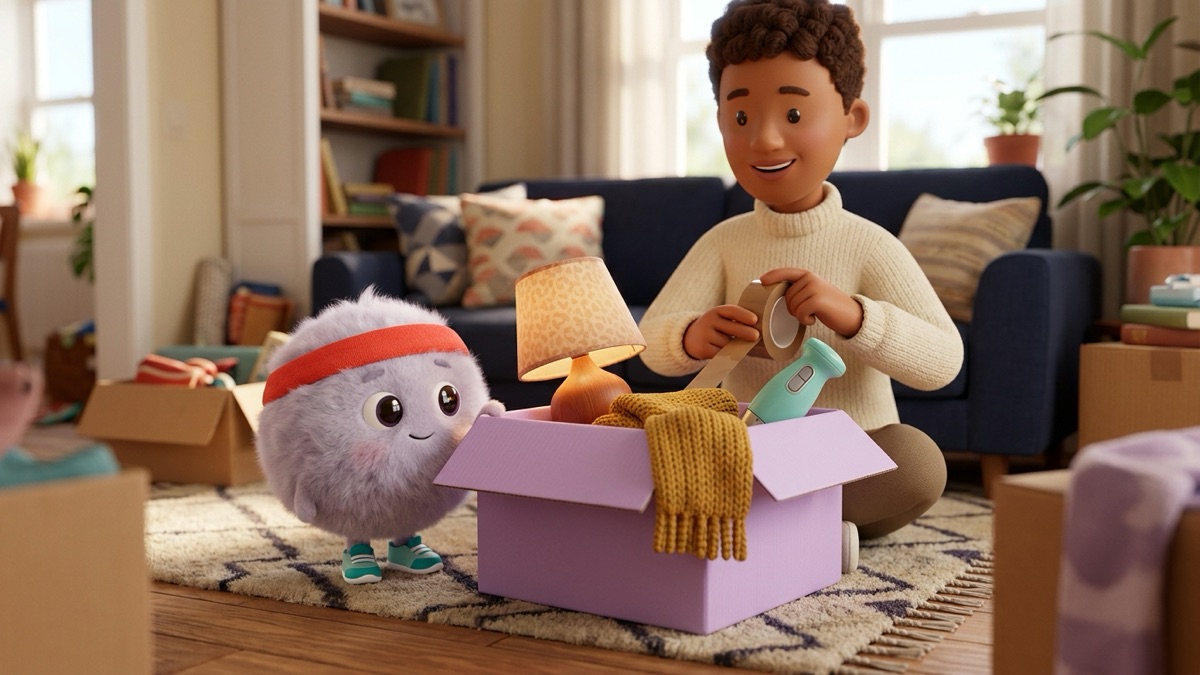
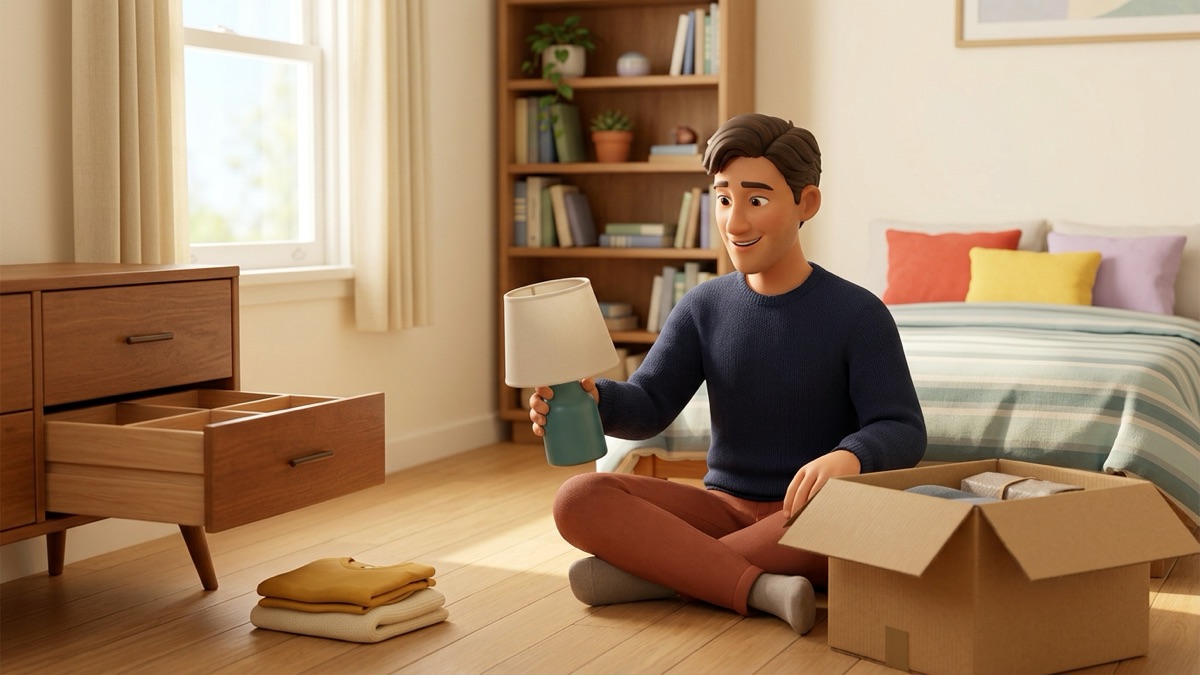
You are halfway through a drawer and you pick up a lamp. You do not use it. You also cannot let it go. Ten minutes later you are still holding the lamp, and the drawer is still half done. This is what the maybe box is for.
Quick answer
A maybe box holds items you cannot decide on yet, so they stop stalling your decluttering. Seal it, write the date on it, and store it out of sight. After 30 days (90 for seasonal things), if you never opened it, donate it without looking inside. If you did, keep only what you took out.
Key takeaways
- The maybe box is a pause button, not a storage unit. It keeps one hard item from stopping a whole session.
- It only works with a date on the box and a reminder in your calendar.
- Use 30 days for most things and 90 days for seasonal things.
- When the date comes, the rule is simple: not opened, not needed. Donate it unopened.
- Important papers, medicine, food and other people's things never go in the box.
What is a maybe box?
A maybe box is a box (or bag, or bin) for the things you cannot decide about during a decluttering session. Instead of forcing a decision, you put the item in the box and keep going. Later, time makes the decision for you.
It is not a new idea. CHADD, the national ADHD nonprofit, suggests sorting into three boxes when organizing: "keep here," "goes somewhere else" and "not sure." The maybe box is that third box, with a deadline added. It is one of the five boxes in our guide to how to start decluttering when you feel overwhelmed, alongside keep, donate, sell and toss.
Why does a maybe box work?
Two reasons: it protects your momentum, and it swaps guessing for evidence.
Momentum first. A decluttering session runs on small, fast decisions. One slow, emotional item can drain the energy you had for the next twenty easy ones. Putting that item in the maybe box keeps the session moving.
Then evidence. Standing in your hallway, you are guessing whether you will need the lamp. A month later, you know. Either you went looking for it or you did not. That is a much easier question to answer than "might I need this someday?"
There is also a reason letting go feels harder than it should. In a classic set of experiments published in 1990, researchers Daniel Kahneman, Jack Knetsch and Richard Thaler randomly gave coffee mugs to half the people in a group, then ran small markets for them. People who were given a mug wanted much more to sell it than others were willing to pay, and far fewer mugs changed hands than expected. They called this the endowment effect. It was a lab study about mugs, not a study of home clutter, but it fits a familiar feeling: once something is yours, it can seem worth more than it is. A few weeks in a box, out of sight, gives that feeling time to fade.
What should go in the maybe box?
Things you are genuinely unsure about, that you could live without for a month. Things with a clear answer, or that you might need urgently, stay out.
| Goes in the maybe box | Stays out | Why |
|---|---|---|
| The gadget you might use "someday" | Trash and broken things | Those already have an answer |
| Clothes that almost fit | Clothes you wear every week | You would open the box by Tuesday |
| Decor you are lukewarm about | IDs, tax papers and records | Important papers need one safe place |
| Hobby supplies from a paused hobby | Medicine and food | They need their own handling |
| Duplicates you might need | Other people's things | Their stuff, their decision |
| A gift you feel unsure about | Irreplaceable keepsakes | These belong in a memory box you choose |
If the maybe box fills up fast, that is a sign to slow down and use the easier questions first. Most items can be decided in a few seconds with the questions in the decluttering checklist.
How big should it be, and where does it live?
One box per session is plenty. A medium moving box or a large tote bag is about right. If you need a second box, you are probably putting easy decisions in there too.
When the session ends:
- Seal it. Tape or tie it shut. A closed box is much less tempting to rummage in.
- Date it. Write today's date on the tape or a tag, plus 30 or 90 days.
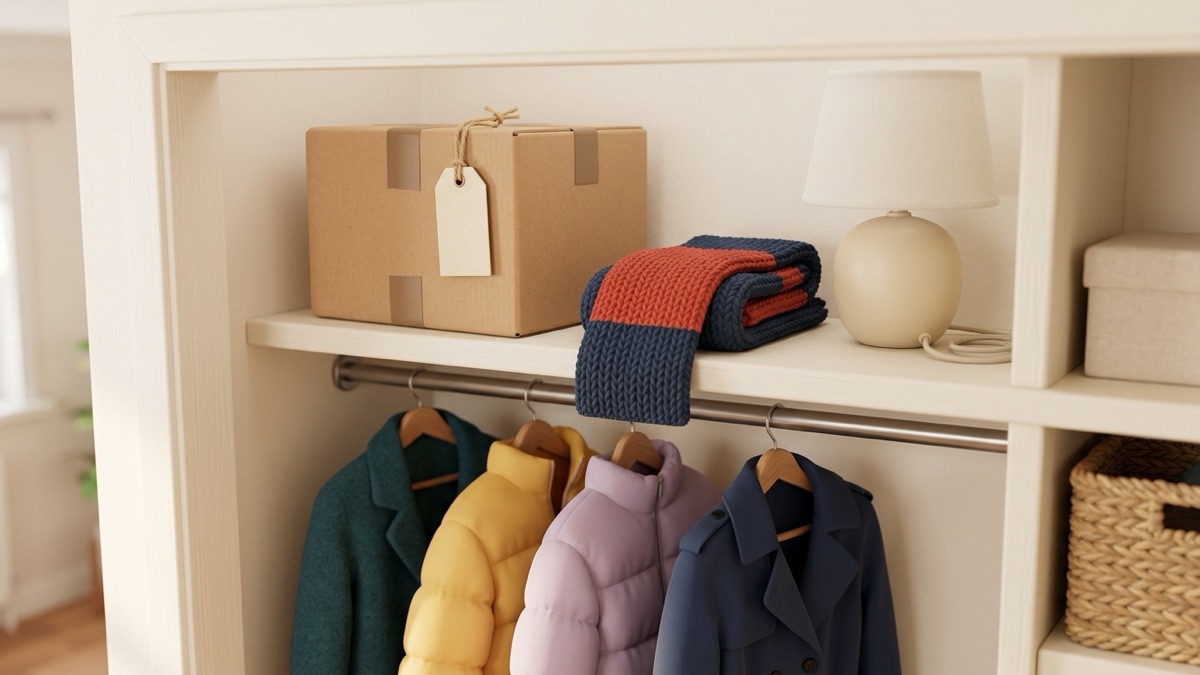
- Move it out of sight. A high closet shelf, the back of a cupboard or under the bed. Not the hallway, where you will trip over it and reopen the debate.
- Set a reminder. A calendar reminder or phone alarm, so the date does not slide by.
Try it
When the free declutter decision helper gives you a maybe box verdict, it shows a maybe box tip with a button that makes a 30 day calendar reminder. Tap it, open the file it saves, and your calendar remembers for you.
Should you wait 30 days or 90?
Thirty days works for most things. It is long enough to notice whether you miss something and short enough that the box does not become permanent furniture.
Ninety days is for seasonal items: a winter coat in autumn, a beach bag in spring, a big serving dish before the holidays. The box needs to sit through the season when you would actually use the thing. Otherwise "I didn't open it" does not tell you much.
If an item is seasonal and the season is months away, use a separate seasonal maybe box with a date that lands at the end of that season.
What do you do when the date comes?
This is the part that makes the whole system work, so keep it simple. Ask one question: did you open the box?
- No, never opened: donate the whole box without looking inside. You did not miss anything in it, and looking only restarts the debate.
- Yes, to get one thing: take out what you went looking for, give it a proper home, then donate the rest.
- Yes, just to peek: it happens. Give yourself 5 minutes, pull out anything you truly want, and donate the rest in the same sitting.
If you feel a pang when the box leaves, that is normal. It usually fades fast, often by the time you are back in the car.
The 10 minute version
- Grab one box and a marker.
- Set a timer for 10 minutes and go through one drawer, shelf or closet corner.
- Easy answers go to their boxes. Anything that makes you pause for more than a few seconds goes in the maybe box.
- At the timer, seal the maybe box, write the date plus 30 days, and put it on a high shelf.
- Set a calendar reminder before you walk away.
That is a complete maybe box session. The hard part happens later, and by then it is not hard at all.
What if letting go makes you panic?
A little anxiety about letting things go is common. A few things help:
- Take a photo. If the memory matters more than the object, a photo can hold it.
- Keep a memory box on purpose. Choose a few keepsakes to keep and enjoy, instead of keeping everything out of guilt.
- Go slower. One maybe box a week is fine. There is no deadline on your whole home.
Heads up
If letting go of things causes real distress, or clutter makes rooms in your home hard to use, that can be hoarding disorder, which the American Psychiatric Association describes as a mental health condition. A mental health professional can help, and a maybe box is not the right tool for it.
If the job feels too big to do alone, a professional organizer can work alongside you; our guide to decluttering services explains what they do. And for a bedroom broken into short sprints, see how to declutter your room.
The TidySprint app, coming soon, will turn a photo of a cluttered spot into a short list of tiny tasks, maybe box included.
The takeaway
You do not have to decide everything today. Put the hard items in a box, seal it, date it and let time do the deciding. When the date comes, not opened means not needed, and the box goes out the door, unopened.
TidySprint guides share practical cleaning and routine ideas. They are not medical advice, diagnosis or treatment. If ADHD, depression or anything else is making daily life hard, please talk to a clinician. Using a strong cleaner? Open a window, follow the label, and never mix bleach with ammonia, vinegar or other cleaners.
Questions people ask
How long should things stay in a maybe box?
30 days for most things and 90 days for seasonal items, so the box sits through the season when you would have needed them. Write the date on the box and set a reminder so the deadline does not slide.
What should you do when the maybe box date comes?
Ask whether you opened the box. If you did not, donate it without looking inside. If you went looking for something, take that one item out, give it a home, and let the rest go.
What should not go in a maybe box?
Important documents, medicine, food, other people's things and anything you use every week. Irreplaceable keepsakes are better in a memory box you choose on purpose.
Is it okay to peek inside the maybe box?
It is your box, so yes, but peeking usually restarts the whole debate. Opening it because you needed something is useful information. Opening it just to look often means you keep everything again.
Where these facts come from
- CHADD: Organizing the Home and Office Space: chadd.org/for-adults/organizing-the-home-and-office-space/
- Kahneman, Knetsch and Thaler 1990, Experimental Tests of the Endowment Effect and the Coase Theorem (Journal of Political Economy): www.journals.uchicago.edu/doi/abs/10.1086/261737
- American Psychiatric Association: What Is Hoarding Disorder?: www.psychiatry.org/patients-families/hoarding-disorder/what-is-hoarding-disorder
Read next

decluttering
Where to Donate Clothes: A No-Guilt Guide
body doubling
Body Doubling for ADHD: What It Is and How to Try It