
Blog decluttering
Swedish Death Cleaning: A Gentle Guide for Any Age
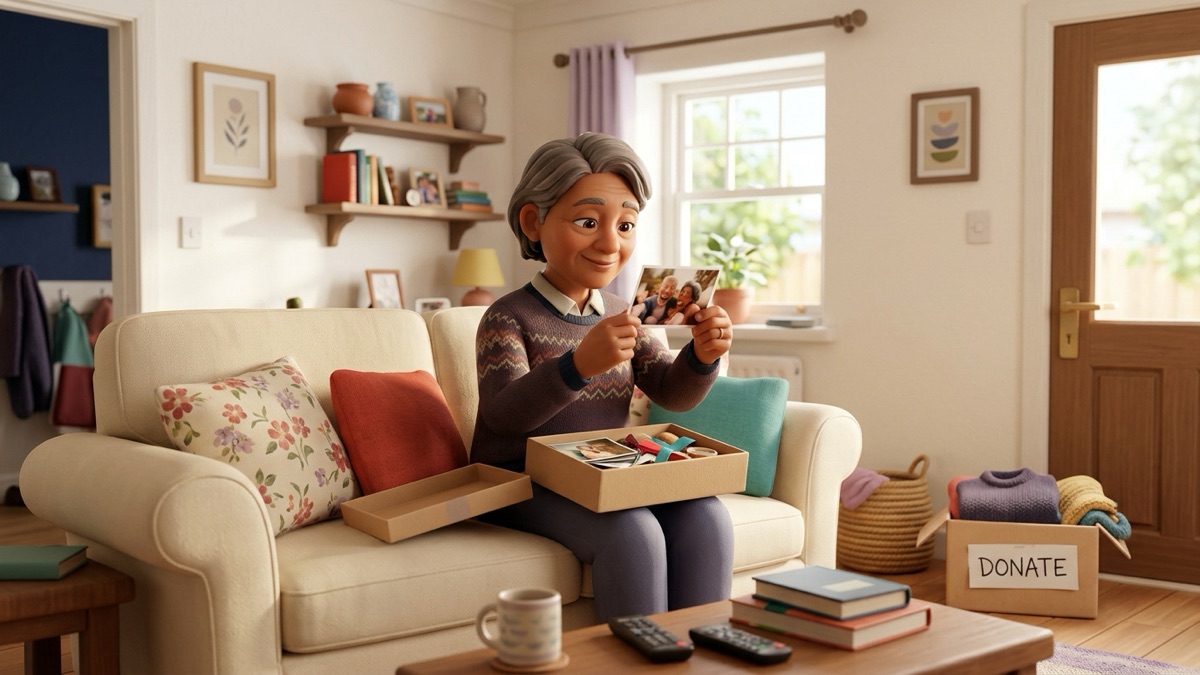
The name sounds like a horror movie and the practice is closer to a long, kind conversation with your own closet. Swedish death cleaning is not about dying. It is about not leaving three garages and a basement for someone you love to sort through on their worst week.
Quick answer
Swedish death cleaning (döstädning) is Margareta Magnusson's practice of slowly clearing what you do not need, so the people you love never have to. Start with easy, impersonal things like extra plates and unworn clothes, save photos and letters for last, work in 10 to 15 minute sprints, and tell your family what you are doing.
Key takeaways
- Döstädning joins the Swedish words for death and cleaning. Margareta Magnusson's book made it famous, and her publisher says it can be done at any age but is best started sooner rather than later.
- It is not minimalism and it is not grim. You keep what you love and use, and you decide the fate of the rest while it is still your decision.
- Start with the easy, impersonal categories. Photos, letters and keepsakes come last, when you have practice.
- Short sprints work better than a dramatic weekend. This is a slow project by design.
- Telling your family is part of the method. They may want things, and they may be relieved.
What is Swedish death cleaning?
The idea comes from Margareta Magnusson, a Swedish artist who wrote The Gentle Art of Swedish Death Cleaning: How to Free Yourself and Your Family from a Lifetime of Clutter, first published in English in 2017 (Scribner publishes it in the US). Her publisher describes döstädning as a kind of decluttering, dö meaning death and städning meaning cleaning, and calls it a "surprising and invigorating process of clearing out unnecessary belongings" that can be undertaken at any age or life stage, but should be done sooner rather than later, before others have to do it for you.
That last part is the whole idea. Most decluttering is about you: your calm, your counters, your mornings. Death cleaning adds one more person to the room: whoever would have to deal with your things if you were not there. It turns out that imaginary person is a very good decision-maker. Would they know what this is? Would they want it? Would they feel guilty throwing it away? If the answer to all three is no, the thing can probably go now, while you are the one choosing.
Magnusson's tone, according to her publisher, is humorous and unsentimental. She suggests letting go of unworn clothes, unwanted presents and more plates than you would ever use, and keeping things like photographs, love letters and a few of your children's art projects. She also writes about digging into her late husband's tool shed and her own "secret drawer of vices," which tells you the book is more fun than the title suggests.
TidySprint is made by Viral Labs and is not affiliated with any other app, author or brand named here.
What Swedish death cleaning is not
It is worth clearing a few misreadings, because the name scares people off.
- It is not only for older people. The publisher says any age. Plenty of people in their thirties do a version after a move or a breakup.
- It is not minimalism. You are not aiming for empty shelves. You are aiming for shelves where every object is either used, loved, or clearly labeled for the person who should have it. If you love 40 teapots, keep 40 teapots and tell someone why.
- It is not one weekend. It is a slow habit, done in small sessions over months or years.
- It is not grim. Most people describe it as lighter than regular decluttering, because the question "would anyone want to deal with this?" is easier to answer than "do I spark joy?"
- It is not a mental health treatment, and it is not for everyone. If letting go of possessions causes real distress, or the amount of stuff is making rooms unusable, that is a different situation from a full closet, and a mental health professional can help. A decluttering guide cannot.
How do you start, and in what order?
The order matters more than the method. Start where the feelings are smallest, so you build the skill before you meet the photo albums.
| Round | Category | Why here | One sprint looks like |
|---|---|---|---|
| 1 | Clothes you do not wear | Impersonal, obvious, fast | One drawer or one rod section, bag what you have not worn in a year |
| 2 | Kitchen extras | Nobody has feelings about the fourth spatula | One cabinet, keep what you use, box the rest for donation |
| 3 | Books, papers, hobby gear | Some feelings, still mostly practical | One shelf or one box, keep what you will reread or use |
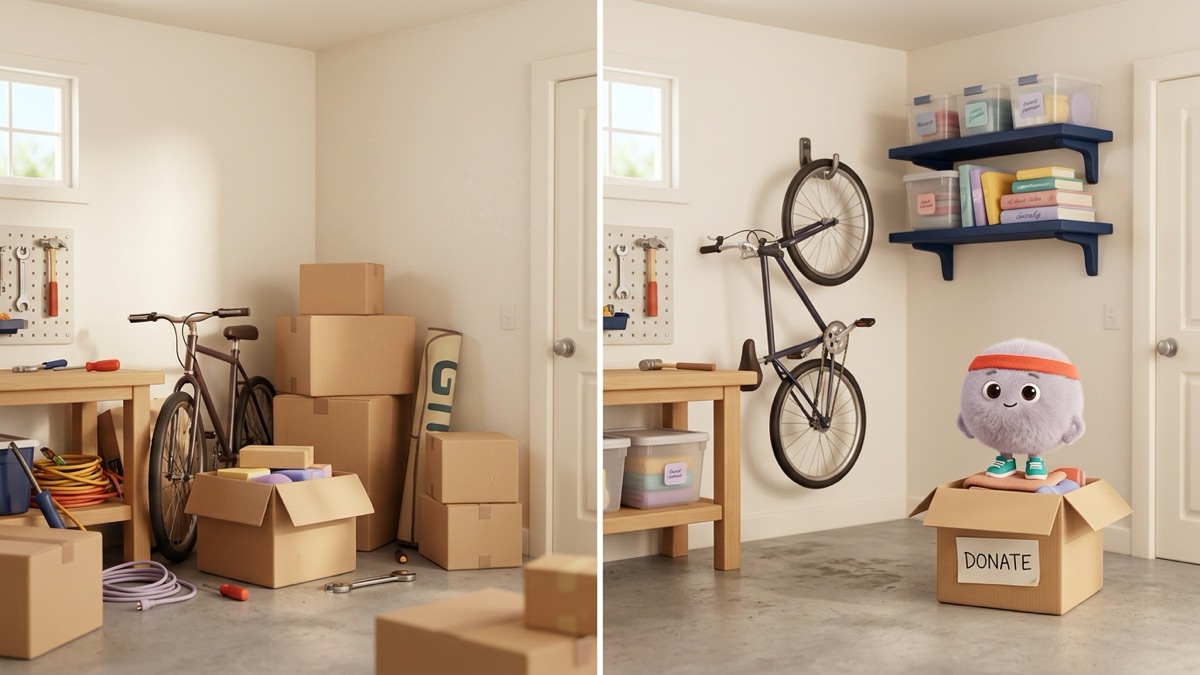
| 4 | Furniture and the garage | Big, but decisions are few | One corner, one clear "who gets this" decision per item |
| 5 | Photos, letters, keepsakes | The hardest, so last | One envelope or one album, label what you keep |
Two rules make the whole list easier. First, one category per sprint, never the whole house. Second, decide the destination before you start: the donate bag, the "ask my sister" pile, the recycling. A thing with nowhere to go stays.
Try it
For any item you are stuck on, the free declutter decision helper asks a few yes or no questions, including whether it is sentimental and whether seeing it makes you feel good or guilty, and gives one answer: keep, donate, sell, toss or the maybe box. It keeps a running tally so you can watch the give pile grow.
The room-by-room Swedish death cleaning checklist
Use this as a map, not a marathon. Tick one line per sprint and stop.
Closet and bedroom
- Bag clothes you have not worn in a year, and read our guide on where to donate clothes so the bag leaves the same week.
- Keep one memory box of clothing (a wedding jacket, a baby sweater). One box, not one closet.
- Clear the top shelf and under the bed. Anything you forgot was there gets the "would anyone want this?" question.
Kitchen
- Keep the plates, mugs and pans you use in a normal week, plus a few for guests. Box the rest.
- Duplicate gadgets: keep the one that works best. Donate the other.
- The "good" dishes: if you have not used them in years, either start using them or offer them to someone who will.
Living room and books
- Books: keep the ones you love or will reread. Offer the rest to a library sale or a little free library. Our guide to where to donate books has the options.
- Decor and collections: keep what you love, and write down (or tell someone) which pieces mean something and why. A collection with a story is a gift. A collection with no story is a job.
Papers
- Shred what you no longer need and lock up what matters. The FTC suggests keeping tax returns and related records at least three years, and keeping birth certificates, titles, deeds and wills forever, in a safe place.
- Make one folder, physical or digital, that says "if something happens": accounts, passwords, who to call. This is the single most useful thing a death cleaner leaves behind.
Garage, basement, attic
- Sort by "who could use this now" rather than "might I need this someday." Tools, sports gear and camping equipment have eager takers.
- Chemicals, paint and batteries do not go in a donation box or the trash. EPA says leftover paints, cleaners and batteries need special care, so take them to a local household hazardous waste drop-off.
Photos, letters and keepsakes
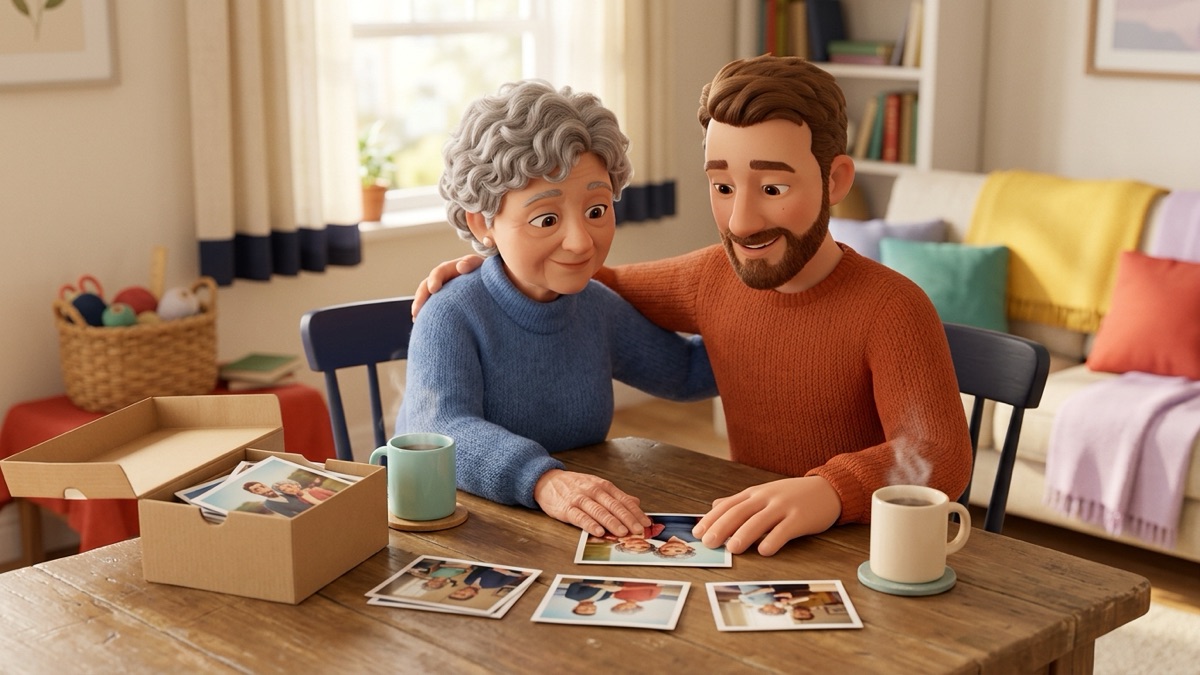
- Do these last, in the shortest sprints, with a cup of tea and maybe a person.
- Keep the best, not all. Fifty photos of the same beach can become five.
- Label the keepers. A photo with names on the back is history. A photo with no names is a mystery for someone else.
- Consider a private box for things that are only for you, with a note that says it can be tossed unopened. You are allowed to keep your secret drawer of vices, as Magnusson did, as long as nobody else has to sort it.
How do you do it in short sprints?
Magnusson's approach is slow by design, and that suits brains that stall on big jobs. CHADD's advice for adults organizing a home is the same: break a complex task into smaller steps, and plan short sessions, 10 to 15 minutes if longer feels frustrating. So the rhythm is:
- Pick one line from the checklist.
- Set a 10 or 15 minute timer.
- Put the donate bag and the recycling bag next to you before you start.
- Sort until the timer ends, then stop, even mid-shelf.
- Bag goes to the car. Timer goes off. You go do something else.
Two or three sprints a week is plenty. Over a few months, that quietly clears more than a heroic weekend ever does, and nobody ends up crying on the garage floor at 9 pm.
Tip
The cleaning sprint timer runs 5, 10 and 15 minute sprints, with an optional body double for company. Company is especially useful for the keepsake rounds, when the tendency to sit down and read every letter is strong.
The 10 minute version
Ten minutes is enough for one honest round.
| Minutes | Do this |
|---|---|
| 0 to 1 | One category, one bag. Set the timer |
| 1 to 7 | Pick up one item at a time. Use, love, or "would anyone want to deal with this?" Bag the no's |
| 7 to 9 | Anything you cannot decide goes in a dated maybe box, not back on the shelf |
| 9 to 10 | Bag to the car. Note what you did on the checklist |
If you have a maybe box going, our guide to the maybe box explains how to date it and let it decide for you.
How do you talk to your family about it?
The publisher's description says Magnusson's method helps families broach sensitive conversations, and that is the part people skip. Here is how to make it easy.
- Say what you are doing and why. "I'm slowly going through the house so it's not a project for you later." Most people are relieved, not upset.
- Ask, do not assume. The chair you think your son wants may be the chair he dreads. Ask each person for a short list of things they would actually like, and honor it.
- Give things now, with the story. A ring handed over at dinner with "this was your grandmother's, she wore it every day" is a gift. The same ring in a box after a funeral is a puzzle.
- Let them say no. A no is not an insult to the object. It just means the object goes on the donate list, with your blessing.
- If you are doing it for a parent, go slowly and keep it their decision. Offer to sort the impersonal categories first, and leave the keepsakes for a day when they have energy and you have time.
If a parent's home has become a safety issue, or the thought of letting go causes real distress, that is beyond a checklist. A health care provider or mental health professional can help, and there is no shame in asking.
Where does it all go?
Deciding is half the job; getting it out of the house is the other half. Clean, wearable clothes go to donation, worn ones to textile recycling. Books go to library sales or free boxes. Furniture and tools have eager takers through local giveaway groups or charities that pick up. As of September 2026, IRS Publication 526 says donated clothing and household items must be in good used condition or better to be deducted, and you need a receipt, so ask for one at drop-off.
If the whole house feels like too much, start with our guide to decluttering when you feel overwhelmed, and use the decluttering checklist to track rounds. The TidySprint app, coming soon, will turn a photo of a crowded room into a short plan of tiny tasks, one shelf at a time.
The takeaway
Swedish death cleaning is a gentle way to ask one useful question of everything you own: would someone I love want to deal with this? Answer it in short sprints, easy categories first, keepsakes last, and tell your family along the way. You end up with a home that holds what matters, and a gift nobody has to unwrap on a hard day.
TidySprint guides share practical cleaning and routine ideas. They are not medical advice, diagnosis or treatment. If ADHD, depression or anything else is making daily life hard, please talk to a clinician. Using a strong cleaner? Open a window, follow the label, and never mix bleach with ammonia, vinegar or other cleaners.
Questions people ask
What is Swedish death cleaning?
It is the English name for döstädning, a Swedish word that joins dö (death) and städning (cleaning). Margareta Magnusson's book describes it as clearing out unnecessary belongings, at any age, so that others do not have to do it for you later. It is about living lighter, not about dying.
Who should do Swedish death cleaning?
Anyone. The publisher's description says it can be undertaken at any age or life stage but should be done sooner rather than later. People often start after a move, a loss, a health scare, or simply because the closet will not close.
How is Swedish death cleaning different from minimalism?
Minimalism is usually about owning less for your own sake. Death cleaning is about the people who will inherit your stuff. You keep what you love and use, and you make sure the rest does not become someone else's weekend.
How long does Swedish death cleaning take?
It is a slow, ongoing project, not a weekend. In short sprints of 10 to 15 minutes, a few times a week, most people see real progress in a couple of months and keep going gently for years.
What should you keep when death cleaning?
Magnusson's book suggests keeping things like photographs, love letters and a few of your children's art projects, and letting go of unworn clothes, unwanted presents and more plates than you would ever use. What you love and use stays. What you keep out of guilt can go.
Where these facts come from
- Simon and Schuster: The Gentle Art of Swedish Death Cleaning by Margareta Magnusson (official publisher page): www.simonandschuster.com/books/The-Gentle-Art-of-Swedish-Death-Cleaning/Margaret
- Open Library: The Gentle Art of Swedish Death Cleaning (editions and first publication year): openlibrary.org/works/OL19095493W
- CHADD: Organizing the Home and Office Space: chadd.org/for-adults/organizing-the-home-and-office-space/
- IRS Publication 526 (2025): Charitable Contributions: www.irs.gov/publications/p526
- FTC: Which Documents to Keep and Which to Shred (June 10, 2025): consumer.ftc.gov/consumer-alerts/2025/06/protecting-your-personal-information-wh
Read next
decluttering
Where to Donate Clothes: A No-Guilt Guide

decluttering
The Maybe Box: Declutter Without the Panic


adhd cleaning
A Dopamine Menu for Cleaning: Make Tidying Feel Good