
Blog decluttering
Where to Donate Clothes: A No-Guilt Guide
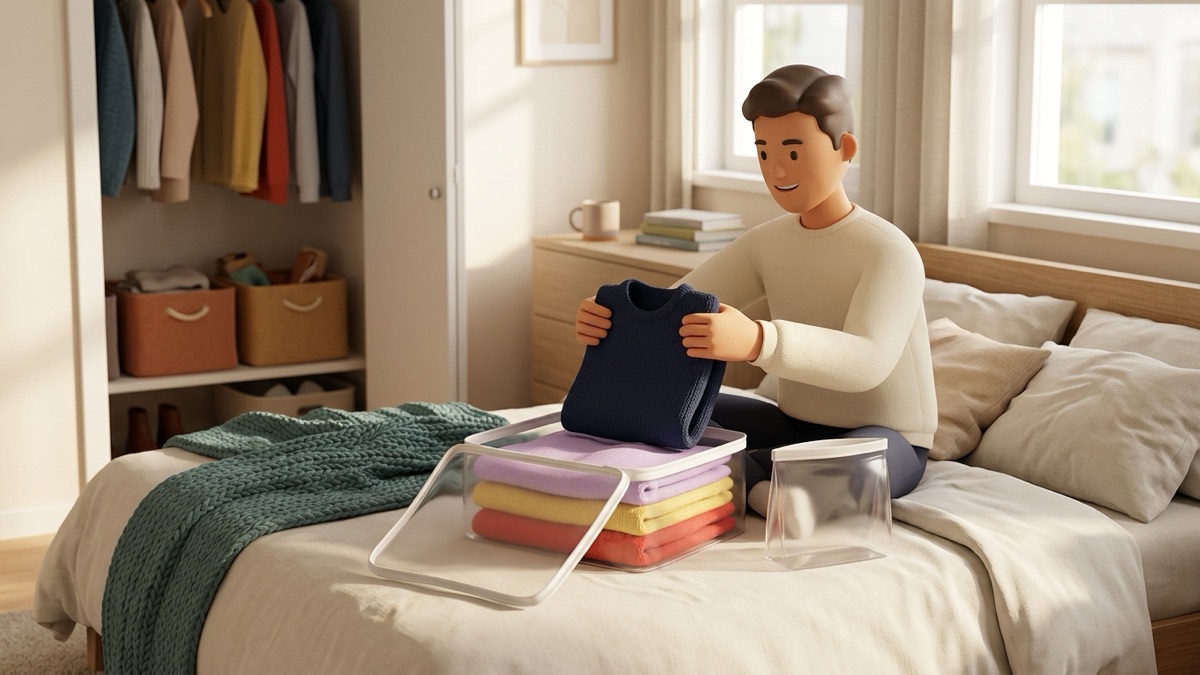
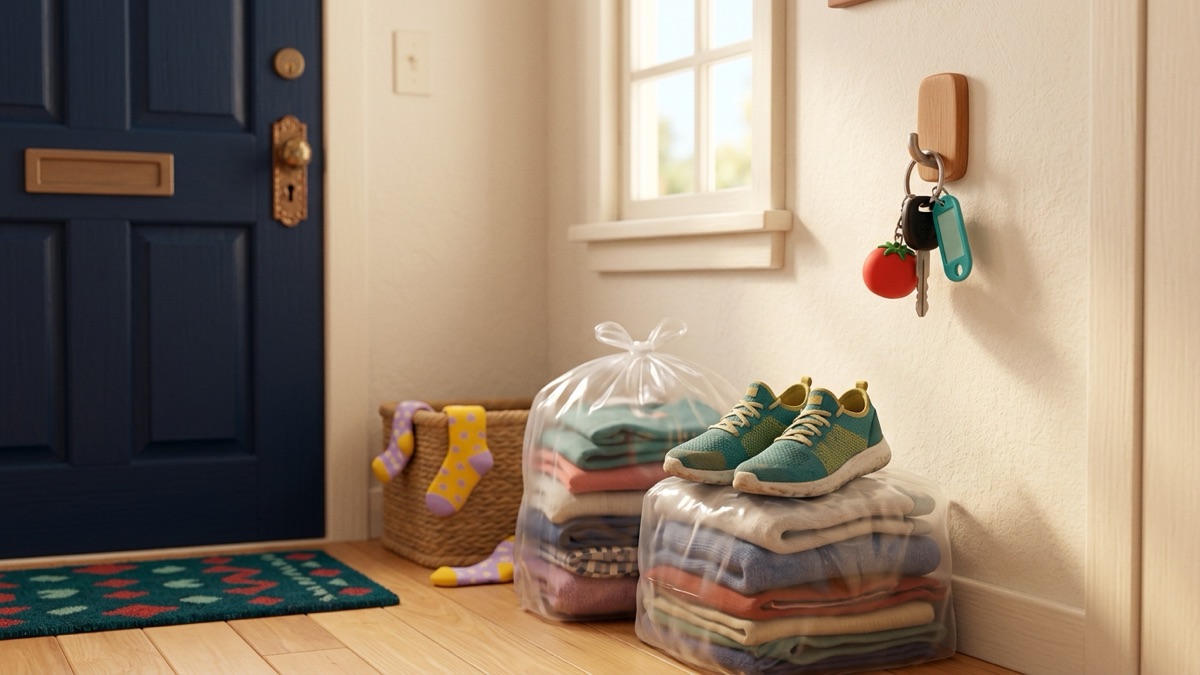
You did the hard part. The closet is edited, the bags are tied, and now they are sitting by the door doing an impression of furniture. Three weeks later they are still there, and you are stepping over them on the way to the same closet. Sound familiar?
Quick answer
Donate clean, wearable clothes to Goodwill, The Salvation Army or a local shelter or thrift store, all of which have drop-off locators. If getting there is the hard part, The Salvation Army and Vietnam Veterans of America offer free pickup in many areas. Worn-out clothes can often go to textile recycling instead of the trash.
Key takeaways
- Goodwill and The Salvation Army take clothing, shoes and accessories at donation centers nationwide, and rules vary by local branch.
- Free pickup exists: The Salvation Army schedules by zip code, and Pickup Please collects labeled bags from outside your door where it operates.
- Dress for Success wants workplace attire, and each location sets its own policy, so check yours first.
- Worn, torn or stained clothes that are clean and dry can often be recycled as textiles. Wet or moldy fabric goes in the trash.
- The stuck-brain rule: bag it, put it in the car, and drop it off the same day, before it turns into decor.
Where can you donate clothes near you?
Most of the answer is "a place you already drive past." National charities have thousands of donation centers and bins, and most towns also have a shelter, a church closet or a local thrift store that resells clothes to fund its programs. Here are the national options, described from their own pages as of October 2026.
Goodwill
Goodwill's donation page says it accepts clothing "from formal wear to everyday outfits," plus shoes, handbags and jewelry, along with household goods and electronics. Proceeds fund local job training and employment programs. Use the locator on its site to find a donation center near you.
One thing to know: Goodwill is a network of local organizations, and its page says donation rules vary by location. Many local Goodwills do not accept mattresses, for example, and it asks you to contact your local Goodwill about furniture. Clothes are the easy case almost everywhere.
The Salvation Army
The Salvation Army takes men's, women's and children's clothing at its stores and donation centers, and it also runs a free pickup service. On satruck.org you enter your zip code, list what you are donating, and pick a date from a calendar. Its pickup page also lists furniture, household goods, books and working appliances, and it says no to paint or chemicals of any kind, gas appliances, and anything broken, rusty or dirty.
Dress for Success
Dress for Success describes its purpose as helping women achieve economic mobility by providing a global network of support, workplace attire and development tools. So the clothes it wants are the ones you would wear to an interview or an office. Its FAQ says each Dress for Success location is an independent nonprofit with its own donation policies, and that most locations do not have the staff to offer pickup, so find your local member on its site and read its list before you drive over.
Pickup Please (Vietnam Veterans of America)
Pickup Please is a free door pickup service run for Vietnam Veterans of America. You schedule online, then leave bags or boxes outside your house on the chosen day, clearly labeled with the charity's name so the driver can find them. It accepts clothing, shoes, purses, belts, household items, toys and books, and it only takes items small and light enough for one person to carry. It partners with one nonprofit per zip code, so availability varies, and the scheduling form tells you whether it serves your area.
Local shelters, closets and thrift stores
Domestic violence shelters, homeless shelters, refugee resettlement groups and church clothing closets often need specific things: coats in winter, new socks and underwear, work boots, plus-size clothing, kids' sizes. Because needs change, call or check the website before you drop off. A shelter that got 40 bags of summer dresses last week may be out of room for a month.
| Organization | Takes clothes? | Pickup? | Check first |
|---|---|---|---|
| Goodwill | Yes, plus shoes and accessories | Varies by local Goodwill | Local rules differ; many refuse mattresses |
| The Salvation Army | Yes, all ages | Yes, schedule online by zip code | No paint, chemicals, gas appliances or broken items |
| Dress for Success | Workplace attire for women | Mostly no | Each location sets its own policy |
| Pickup Please (VVA) | Yes, plus shoes and household items | Yes, labeled bags outside your door | Serves some areas, not all |
| Local shelters and closets | Usually, and often need specific items | Rarely | Call or check the site for current needs |
TidySprint is made by Viral Labs and is not affiliated with any other app, author or brand named here.
What should you not donate?
The kind version of this rule is: would you hand it to a friend? If you would be embarrassed, it is not a donation. Sorting volunteers have to deal with whatever lands in the bin, and unusable items cost the charity money to throw away.
- Wet, moldy or smelly clothes. These go in the trash. Massachusetts, which banned textiles from the trash, still exempts contaminated fabric, and The Salvation Army says no to anything dirty.
- Anything broken or missing parts. A jacket with no zipper is a repair project, not a gift.
- Underwear and socks, unless new. Many shelters want them, but new in the package.
- Recalled products. Selling recalled items is unlawful, and charities cannot resell them either. If you are unsure about kids' sleepwear or gear, search the recall list before you donate.
Heads up
If a donation bag has been sitting in a damp garage or trunk for months, open it and check before you drop it off. Do it outside or with a window open, and anything that smells musty or has visible spots goes in the trash, not the bin.
What about clothes too worn to donate?
This is where a lot of people get stuck, because throwing fabric away feels wrong and donating it feels dishonest. There is a third door: textile recycling.
EPA's most recent numbers are for 2018, when 17 million tons of textiles were generated in the US and 11.3 million tons went to landfills. Discarded clothing was the main source. That is the backdrop for a growing number of textile recycling programs, some run by cities and some by companies.
Massachusetts is the clearest example. In November 2022 it banned textiles from disposal, and its environmental agency says worn, torn and stained items can still go to a textile recycler as long as they are clean and dry. Its Beyond the Bin directory lists drop-offs by town. Other states and cities have their own programs, and some clothing retailers run take-back bins, so search your city's name plus "textile recycling" and see what comes up.
If you have no program nearby, worn cotton makes decent cleaning rags. Cut up two old T-shirts, keep them under the sink, and let the rest go without guilt. You are one household, not a landfill policy.
Our guide to decluttering clothes covers the sorting part, before you get to the bags.
How do you actually get the bags out of the house?
Here is the honest problem. Deciding what to donate takes one kind of energy. Driving it somewhere takes a completely different kind, and it is the kind that a stuck brain rarely has on a Tuesday. So the bags sit.
The fix is to remove the second trip entirely.
- Bag it as you sort. One bag for donate, one for textile recycling. No "decide later" pile on the bed.
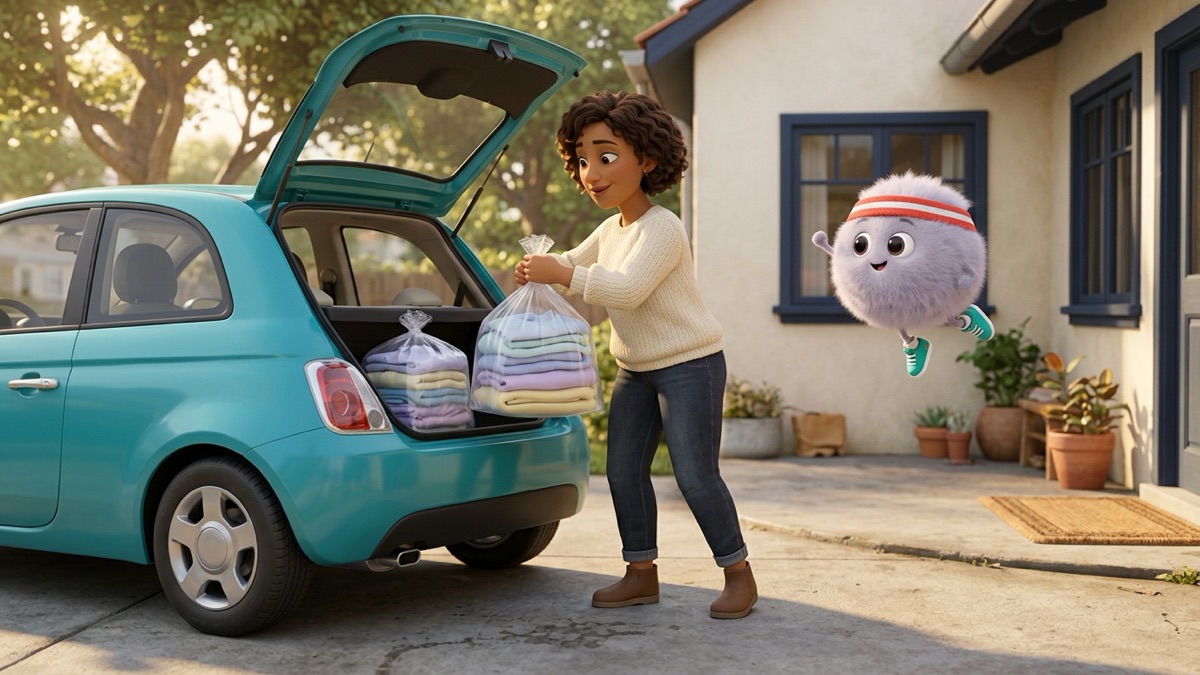
- Put the bag in the car, not by the door. By the door it becomes furniture. In the car it rides along until you pass a donation center anyway.
- Drop it on a trip you are already making. Grocery store, school run, gym. Most donation centers are on the way to something.
- Or book the pickup right now. Pickup Please and The Salvation Army let you schedule online in a few minutes. Book it while the bags are in your hand, then leave them outside on the day.
- Set a deadline for anything you plan to sell. Not sold in 30 days? It goes into the donate bag. No second thoughts.
Try it
Not sure whether a piece is donate, sell or toss? The free declutter decision helper asks a few yes or no questions, like whether you have worn it in the last 12 months and whether you would buy it again today, and gives one clear answer. Its donate answer says exactly this: put it straight in a bag, and put the bag in your car so it leaves the house this week.
The 10 minute donation run
You do not need a whole afternoon. This is the version that fits in the gap before you leave the house.
| Minutes | Do this |
|---|---|
| 0 to 2 | Grab one bag. Open the closet or the drawer you avoid most |
| 2 to 7 | Pull 10 pieces you already know you will not wear. Clean ones only. Bag them |
| 7 to 8 | Tie the bag. Write "donate" on it if you have a marker handy |
| 8 to 10 | Carry it to the car, or book a pickup on your phone while you stand there |
Ten pieces, ten minutes, and it is already leaving. Do this a few times and the closet edit happens without a single dramatic Saturday.
Can you deduct donated clothes?
Sometimes. As of September 2026, IRS Publication 526 for 2025 returns says you cannot take a deduction for donated clothing or household items unless they are in good used condition or better, and for gifts below the $250 threshold you need a receipt or written communication from the organization. Ask for a receipt at drop-off, or take a photo of the bags and note the date. A tax professional can tell you what applies to your situation.
Where does this fit in the bigger declutter?
Donation is the last step of every closet edit, and knowing exactly where the bags will go makes the first step easier. If the whole house feels like too much, start with our guide to decluttering when you feel overwhelmed, which is built around one small area at a time. Anything you cannot decide on can wait in a maybe box with a date on it. And if you are clearing a home with a longer view, Swedish death cleaning is a gentle way to think about what stays.
The TidySprint app, coming soon, will turn a photo of a crowded closet into a short plan of tiny tasks, including "bag 5 pieces to donate."
The takeaway
The clothes you no longer wear can be worn by someone who needs them, and the worn-out ones can become something other than landfill. You do not have to find the perfect charity. You have to find the nearest one, bag it clean, and let it leave the same day. The bag by the door has waited long enough.
TidySprint guides share practical cleaning and routine ideas. They are not medical advice, diagnosis or treatment. If ADHD, depression or anything else is making daily life hard, please talk to a clinician. Using a strong cleaner? Open a window, follow the label, and never mix bleach with ammonia, vinegar or other cleaners.
Questions people ask
Where is the easiest place to donate clothes?
Usually the nearest donation center or bin you already drive past. Goodwill and The Salvation Army have locators on their sites, and rules vary by local branch, so a quick look at the local page saves a wasted trip.
Can I get clothes picked up from my house?
Sometimes. The Salvation Army offers a free pickup you schedule online by zip code, and Vietnam Veterans of America's Pickup Please service collects labeled bags from outside your home in the areas it serves. Availability depends on where you live.
What clothes should you not donate?
Anything wet, moldy or smelly, and anything you would not hand to a friend. Worn, torn or stained clothes that are clean and dry can often go to textile recycling instead of the trash, depending on your area.
Do donated clothes need to be washed?
Yes. The Salvation Army says no to dirty items, and a bag that has been washed and folded is far more likely to be resold or reused. It also keeps the sorting volunteers' day nicer.
Can I deduct donated clothes on my taxes?
Possibly. IRS Publication 526 says clothing must be in good used condition or better to be deducted, and you need a receipt or written acknowledgment from the organization. A tax professional can help with your own situation.
Where these facts come from
- Goodwill Industries International: Donate Clothes, Household Goods and Electronics: www.goodwill.org/give/donate-goods/
- The Salvation Army: Schedule a Donation Pickup (satruck.org): satruck.org/
- Dress for Success: FAQs: dressforsuccess.org/faqs/
- Dress for Success: About Us: dressforsuccess.org/about-us/
- Vietnam Veterans of America Pickup Please: home page and acceptable donations: pickupplease.org/acceptable-donations/
- Massachusetts Department of Environmental Protection: Clothing and Textile Recovery: www.mass.gov/guides/clothing-and-textile-recovery
- EPA: Textiles: Material-Specific Data: www.epa.gov/facts-and-figures-about-materials-waste-and-recycling/textiles-mater
- IRS Publication 526 (2025): Charitable Contributions: www.irs.gov/publications/p526
- CPSC: FAQs for Buying and Selling Products Online (recalled products): www.cpsc.gov/About-CPSC/Division-of-Field-Operations/FAQs-For-Buying-and-Selling
Read next
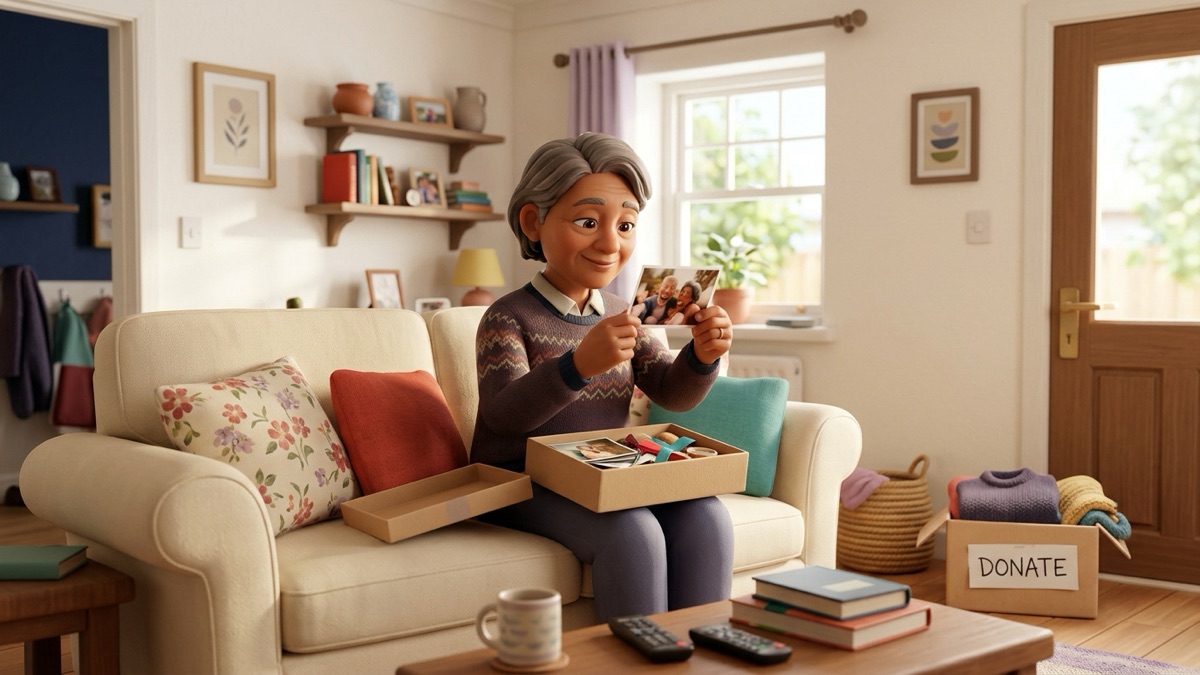


decluttering
The Maybe Box: Declutter Without the Panic

speed cleaning
Speed Cleaning: How to Clean Your House Fast, No Burnout