Blog adhd cleaning
A Dopamine Menu for Cleaning: Make Tidying Feel Good
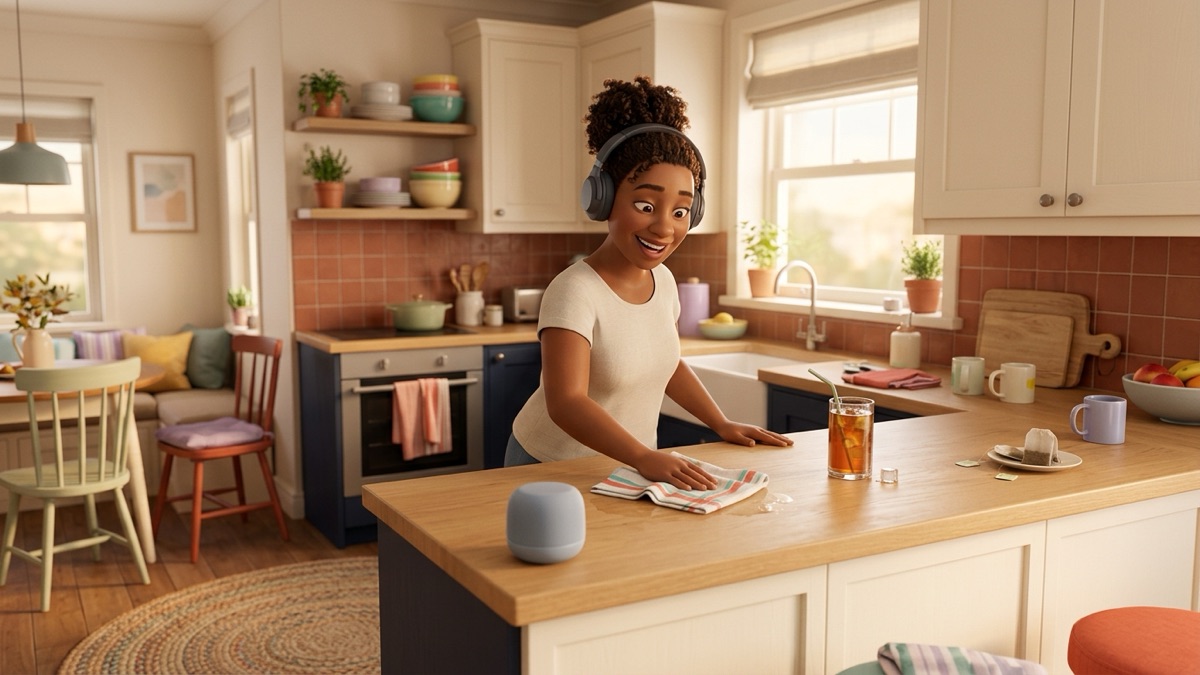
There is a specific kind of tired where you are not exactly sleepy, you are just out of whatever it takes to get off the couch. The dishes know it. The laundry knows it. Your phone knows it best of all, which is why it is in your hand again.
Quick answer
A dopamine menu is a written list of things that reliably make you feel better, sorted like a restaurant menu: starters, mains, sides, desserts and specials. For cleaning, use a starter to get moving, a side to make the chore bearable, and a dessert you picked in advance as the reward for stopping on time.
Key takeaways
- The dopamine menu (or "dopamenu") is credited to Jessica McCabe of How to ADHD and written up by ADDitude. The name is a nickname, not a brain-chemistry claim.
- The categories are starters (quick lifts), mains (bigger, satisfying activities), sides (things you do alongside a boring task), desserts (easy to overdo) and specials (rare treats).
- For cleaning: starter before, side during, dessert after, with the reward chosen before you begin.
- CHADD's advice for organizing tasks is the same in plainer words: pick a reward first, and give it to yourself when you finish.
- Write it down and put it where you will see it. A menu you have to remember is not a menu.
What is a dopamine menu?
The idea comes from Jessica McCabe, creator of the How to ADHD YouTube channel and author of a book by the same name. ADDitude, the ADHD magazine, describes her dopamine menu as a curated list of options that lightens the mental load of finding pleasurable, healthy activities when you need them most. Instead of reaching for whatever is nearest (usually the phone), you have a menu written in advance and you order from it.
McCabe structures it like a restaurant menu, and ADDitude lays out the courses like this:
- Starters (appetizers): quick activities that give a burst of lift without sucking you in. A favorite song, a stretch, a coffee, a few jumping jacks, a warm shower.
- Mains (entrees): more time-consuming activities that make you feel alive. Exercise, a hobby, cooking, a walk with the dog, journaling.
- Sides: things you can do at the same time to make a boring task more stimulating. White noise, podcasts, fidgets, turning the task into a game, body doubling.
- Desserts: activities that are easy to overdo because they give a quick hit. Scrolling, TV, games, texting.
- Specials: occasional, bucket-filling things that cost more or need planning. Concerts, a trip, dinner out, a massage.
ADDitude also passes on McCabe's practical advice: put barriers in front of the desserts (more steps to get to them) and remove steps from the healthier menu items, then make the finished menu visible. She keeps hers on the coffee table, the fridge and the office wall.
One honest note. "Dopamine" is in the name because it is catchy, and we are not going to pretend this post knows what your brain chemistry is doing. Treat it as what it is: a very good list, sorted well. It is not medical advice, and TidySprint is not a treatment for ADHD. If you are wondering whether ADHD is part of your story, a health care provider or mental health professional is the place to start.
TidySprint is made by Viral Labs and is not affiliated with any other app, author or brand named here.
Why do rewards matter so much for cleaning?
Because cleaning has a terrible built-in reward schedule. You work for 20 minutes and the reward is a kitchen that looks like a kitchen. Nice, but not exactly a thrill, and the mess comes back by Thursday. A brain that runs on interest and immediacy needs something better than "it's clean now."
The official ADHD sources say this without the menu language. CHADD's organizing page for adults suggests selecting a reward before you start an organizing task and giving it to yourself when you finish. Its to-do list advice asks, for a task that keeps not getting done, whether it is too big (break it into subtasks) or dreaded (promise a small reward). NIMH notes that adults with ADHD may find it hard to stay organized and perform daily tasks, and that procrastination is common. None of that is a moral failing. It is a reason to build the reward in on purpose.
A dopamine menu is the "promise a small reward" step, done once, written down, and ready before the dread starts. Our ADHD cleaning guide puts it as step four of five: pick the reward before you start.
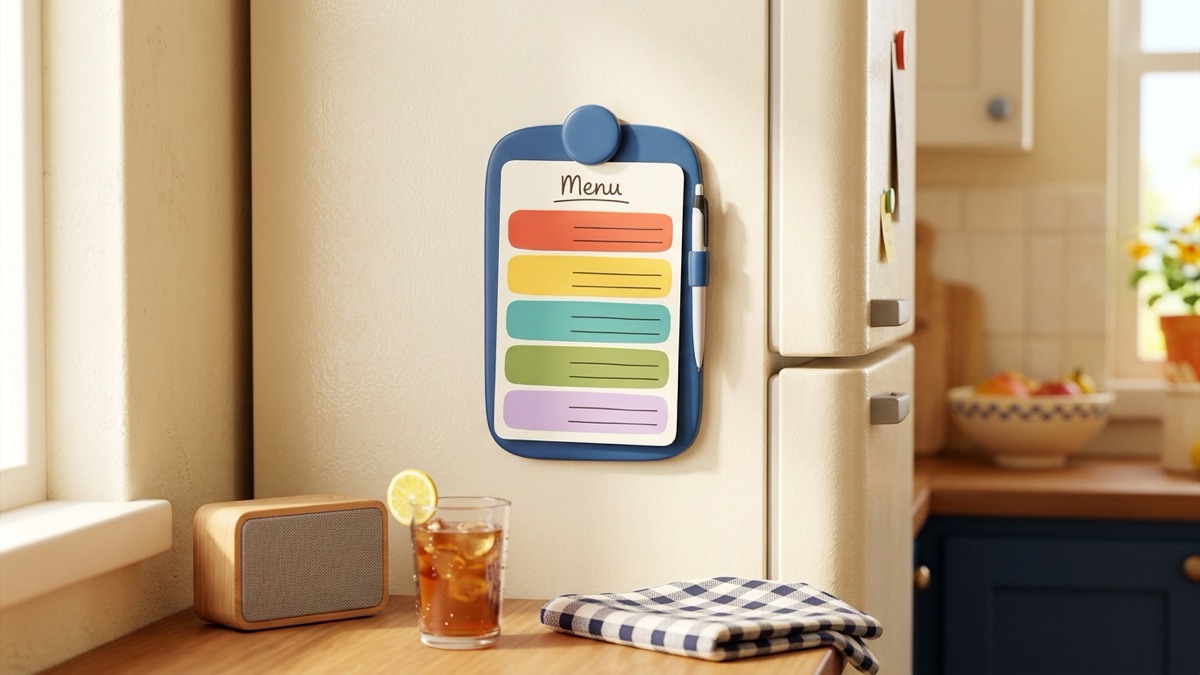
How do you build a dopamine menu for cleaning?
The trick is to map the courses onto the three moments of a chore: before, during and after.
Starters: the thing you do before you start
The job of a starter is to get your body moving in a direction that is not the couch. It should take under 5 minutes, and it should not be something you can get lost in. Good cleaning starters:
- One loud song, and you have to stand up for it.
- A glass of cold water or a coffee, drunk standing by the sink.
- 20 jumping jacks or a stretch that cracks something.
- Opening a window. Fresh air counts as a starter and as ventilation.
- Putting on the "cleaning shoes" or the apron. Costume changes are underrated.
The starter is also the answer to the frozen moment. If you are stuck, you do not have to start cleaning. You only have to order a starter. Our post on ADHD paralysis and cleaning goes deeper into that first move.
Sides: the thing you do while you clean
Sides are the course that turns a boring task into a bearable one. Pick one per sprint, not three.
- A podcast or audiobook that you only allow yourself during chores. Suddenly the dishes are the only way to find out what happens next.
- A body double. CHADD describes it as a friend or partner working at the same time, in person or over video, and calls it an easy, cost-free support. A stand-in on a screen works for some people too.
- A visible timer. Watching a ring shrink is oddly satisfying, and the end is never in doubt.
- A game rule: everything blue first, or ten items before the chorus ends.
- Nice supplies. A cloth you like and a spray that smells good (one cleaner, follow the label) are a tiny side dish every time.
Try it
The free cleaning sprint timer bundles three sides in one place: a 5, 10 or 15 minute timer you can watch, one tiny task at a time so there is nothing to decide, and an optional body double, Zip, who cleans alongside you. When the sprint ends it hands you a small reward from its own list, like "Put on one song you love, loud."
Desserts: the reward after you stop
Desserts are the fun part and the dangerous part. ADDitude's description is that they are easy to overdo. So the rule for cleaning desserts is: chosen before you start, with a size.
- 15 minutes of a show, and the timer runs for that too.
- One round of a game.
- Ten minutes of scrolling, sitting in the spot you just cleared.
- A snack you like, eaten at the clean table.
The size is the whole trick. "TV after" becomes the rest of the night. "One episode, then I decide again" is a dessert.
Specials: the big reward for a big reset
Specials are for the once-a-month or once-a-season jobs, the ones that take three sprints instead of one. Takeout on the night the kitchen is finally clear. A friend over for coffee the day after the living room reset, which also gives the reset a deadline. A new plant for the windowsill you uncovered.
Mains: the reason you clean at all
Mains do not fit inside a sprint, and they are not supposed to. They are the life you get when the space works: cooking in a kitchen with a clear counter, doing yoga on a floor you can see, having people over without a 3 hour panic first. Put one or two on the menu anyway. On a low day it helps to remember that the counter is not the point. Dinner is.
The fill-in-the-blank menu
Copy this table into a note, or write it on an index card for the fridge. One item per line is plenty to start. ADDitude offers a free printable template too, in exchange for an email address, if you want something prettier.
| Course | When | Mine (fill in) | Example |
|---|---|---|---|
| Starter | Before, under 5 minutes | One loud song, standing up | |
| Side | During, pick one | Podcast only for chores | |
| Dessert | After, with a size | One episode, then decide again | |
| Special | After a multi-sprint reset | Takeout at the clear table | |
| Main | Why the space matters | Cooking Sunday dinner |
Tip
Keep the menu short and honest. If a "starter" actually swallows an hour (looking at you, "just one video"), it is a dessert wearing a disguise. Move it down the menu and give it a size.
The 10 minute version
A full menu is nice. A 10 minute sprint with a menu is the thing that actually gets the kitchen done tonight.
| Minutes | Course | Do this |
|---|---|---|
| 0 to 2 | Starter | One song, loud. Stand up for it. Open a window. |
| 2 to 9 | Side | Podcast on, 7 minute timer, one surface: clear it, wipe it. |
| 9 to 10 | Dessert | Stop at the timer. Pour the drink. Sit at the clear surface. |
That is the whole thing. Starter, side, dessert, done. The next sprint is a fresh choice, not an obligation.
How do you keep the menu working?
Menus go stale. The song stops working, the podcast ends its season, the snack stops being exciting. That is normal. Rewrite the menu every month or so, and keep these rules:
- Visible beats clever. Fridge, mirror, the lock screen. If you have to remember it exists, it does not.
- Rewards go in the plan, not just your head. If you use a planner or a schedule, write the dessert next to the chore. Our guide to ADHD planners for adults covers how to build one you will keep using, and the free cleaning schedule maker leaves room for the small stuff.
- Rest is a menu item. A starter can be "lie on the floor for 3 minutes." Stopping is part of the method, and it deserves a spot on the list.
- No punishment course. There is no section for what happens if you do not clean. The menu is only for what you get.
More small, practical moves live in our ADHD cleaning tips. The TidySprint app, coming soon, will turn a photo of a messy room into tiny tasks and hand you a small reward when the sprint ends.
The takeaway
You are not bribing yourself. You are being a decent manager of a brain that runs on interest, and giving it a menu instead of a lecture. Starter before, side during, dessert after, and the reward decided while you still have the energy to decide. Order something.
TidySprint guides share practical cleaning and routine ideas. They are not medical advice, diagnosis or treatment. If ADHD, depression or anything else is making daily life hard, please talk to a clinician. Using a strong cleaner? Open a window, follow the label, and never mix bleach with ammonia, vinegar or other cleaners.
Questions people ask
What is a dopamine menu?
A dopamine menu, or dopamenu, is a written list of activities that reliably lift your mood, sorted like a restaurant menu into starters, mains, sides, desserts and specials. Jessica McCabe of the How to ADHD YouTube channel is credited with the idea, and ADDitude has written it up with a free template.
How does a dopamine menu help with cleaning?
It takes the deciding out of two hard moments: what to do before you start so you have some energy, and what you get when you finish. CHADD suggests picking a reward before an organizing task and giving it to yourself when you are done. A menu is that list, written down in advance.
What are good dopamine menu ideas for cleaning?
Starters: one loud song, a cold drink, 20 jumping jacks. Sides: a podcast, a body double, a timer you can watch. Desserts (after, with a limit): 15 minutes of a show, one round of a game. Specials: takeout on the night the kitchen is finally clear.
Is a dopamine menu medical advice?
No. It is a planning trick with a catchy name, not medical advice, and we are not making any claim about brain chemistry. If you think ADHD might be part of your story, a health care provider or mental health professional can do a proper evaluation.
Do I need a printable template?
Not really. A sticky note with five headings works. ADDitude offers a free template in exchange for an email address, and this post has a fill-in-the-blank table you can copy.
Where these facts come from
- ADDitude: Using a Dopamine Menu to Stimulate Your ADHD Brain (updated July 11, 2026): www.additudemag.com/dopamenu-dopamine-menu-adhd-brain/
- ADDitude: Your ADHD Dopamine Menu Template (free download): www.additudemag.com/download/dopamine-menu-template-adhd/
- CHADD: Organizing the Home and Office Space: chadd.org/for-adults/organizing-the-home-and-office-space/
- CHADD: Time Management and ADHD: To-Do Lists: chadd.org/for-adults/time-management-and-adhd-to-do-lists/
- NIMH: ADHD in Adults: 4 Things to Know: www.nimh.nih.gov/health/publications/adhd-what-you-need-to-know
- CHADD ADHD Weekly: Could a Body Double Help You Increase Your Productivity?: chadd.org/adhd-weekly/could-a-body-double-help-you-increase-your-productivity/
Read next
adhd cleaning
ADHD Cleaning: A Zero-Shame Guide to a Tidier Home
adhd cleaning
ADHD Paralysis and Cleaning: How to Get Unstuck
adhd cleaning
ADHD Cleaning Tips That Work on Low-Focus Days
schedules checklists
ADHD Cleaning Schedule: Daily, Weekly and Monthly