
Blog adhd cleaning
ADHD Planner for Adults: How to Pick One You Will Use

You have owned a planner before. Possibly several. The first week was beautiful, there may have been color coding, and then it disappeared under a pile of mail and was never heard from again.
That does not mean planners are not for you. It usually means that planner was built for a tidier, more predictable week than the one you actually live.
Quick answer
The best ADHD planner for adults is the one you will see every day. Choose paper if you like things visible and jot notes, a phone app if you lose things and want reminders, or a whiteboard for household chores. Look for undated pages, a weekly spread and a one-page view, and check it morning, midday and evening.
Key takeaways
- Pick the format that matches how you already work: paper if you like to see and scribble, an app if you misplace things, a whiteboard if the plan is for the whole household.
- Undated pages, a weekly spread and a one-page view matter more than stickers and hourly grids.
- Give the planner one home, and look at it three times a day, as CHADD suggests.
- Write chores as small actions ("wipe the counters"), not projects ("clean the kitchen").
- Abandoned one before? Start on today's page and never back-fill the missed weeks.
Why does a planner matter so much with ADHD?
CHADD's fact sheet on day planners puts it plainly: many people with ADHD find that weak organizational skills, poor time management and problems with working memory (holding information in mind while you use it) add up to lost time and unfinished projects, at work and at home. NIMH says adults with ADHD may find it hard to stay organized, keep appointments and perform daily tasks.
A planner is memory you can hold in your hand. CHADD says a day planner can help you manage your time, remember your responsibilities and stay organized.
The catch is that it only works if you see it. CHADD's to-do list fact sheet says the key is keeping the list somewhere you will see and use it, not tucked away in a drawer. Most planner "failures" are really location failures.
A planner is a tool, not a treatment. If ADHD is making daily life hard, a health care provider or mental health professional can help.
Paper, app or whiteboard: which ADHD planner fits you?
CHADD's advice is refreshingly practical: each type has its advantages, and you have to work out which one suits you.
| Type | Best if you | Watch out for | For chores |
|---|---|---|---|
| Paper planner | Like seeing everything and jotting notes | It can get lost, and it cannot remind you | Good for a weekly zone list |
| Phone app or calendar | Misplace things, want reminders that ping | Alerts you learn to swipe away | Good for repeating chores |
| Whiteboard or wall calendar | Share a home and want one plan everyone sees | It stays home when you leave | Good for shared chores |
| One-page printed week | Want the simplest possible start | Needs a fresh copy when life changes | Made for chores |
CHADD adds a few details. If you have appointments every half hour or hour, pick a planner that gives each day its own page; if you mostly need lists, a week at a time should be fine. A phone app can remind you with a pop-up, an email or a sound and sync with your other calendars, which helps if you do not want one more thing to misplace.
It is also fine to use two: a phone calendar for appointments, and paper or a whiteboard for chores, as long as each has one job. The trap is five systems, none of them checked.
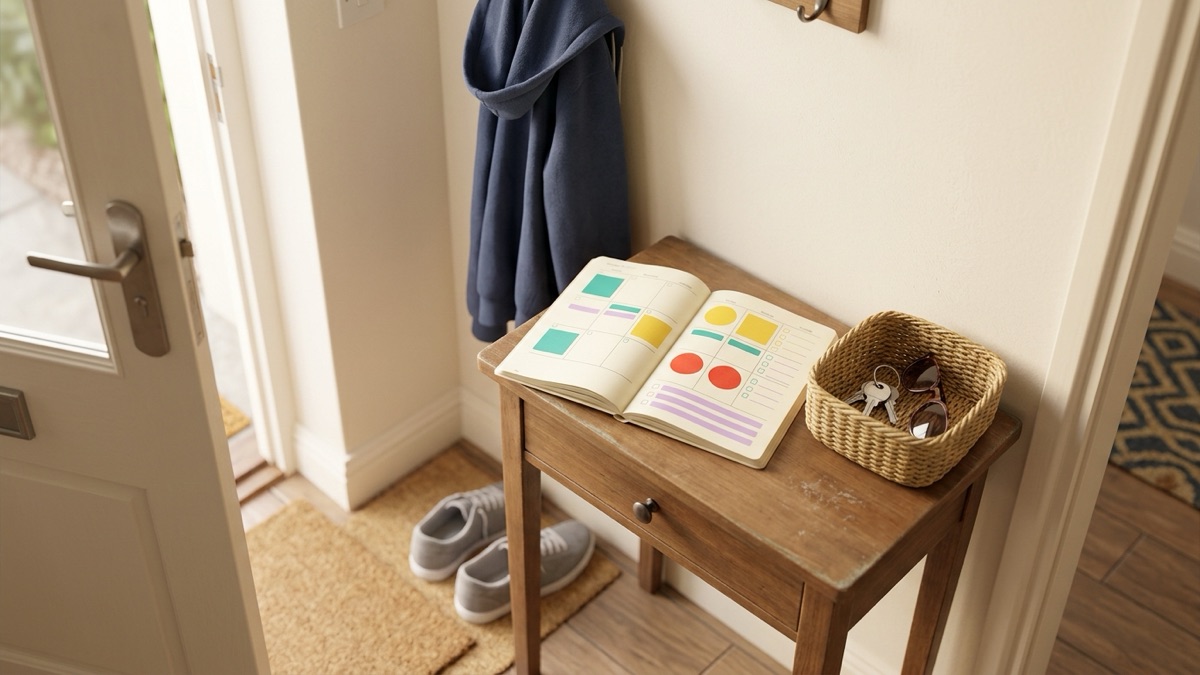
What features actually matter in an ADHD planner?
These are the features that decide whether a planner survives past week three.
- Undated pages. Skip a week in a dated planner and you get a row of blank, slightly judgy pages. With undated pages you just write today's date and carry on.
- A weekly spread. Seeing the whole week on one or two pages makes it easier to spot the busy day and put chores somewhere else.
- A one-page view. Everything that matters today on one page you can glance at. Flipping between sections is where things get lost.
- Space for a daily reset. A small box for the same 3 to 5 tiny tasks every day, so you are not rewriting them.
- A top 3 spot. CHADD suggests picking the three most important items from a long list and numbering them 1, 2, 3 so they stand out.
- A brain dump page. CHADD suggests using the planner as a "brain dump" for ideas and thoughts as they come, then moving items onto your daily list once a day or every couple of days.
- The right size. A gorgeous planner that is too heavy to carry is a very nice doorstop.
What you can skip: 30-box habit trackers, sticker sheets and hourly grids you will never fill. They are not bad. They just add steps, and every extra step is a place to stop.
How do you use an ADHD planner for chores?
Chores are where planners quietly fall apart, because "clean" is not something you can check off.
Write chores as actions
CHADD's to-do list advice uses the kitchen as its example: "clean the kitchen" is so broad you might ignore it, so break it into steps such as emptying the dishwasher, wiping down the counters, throwing out expired food and sweeping. Each step gets its own line and its own checkbox.
Give each cleaning day one zone
Monday is kitchen, Wednesday is bathroom, Friday is laundry, so you are not deciding what to clean every time. Three days you keep beat six you skip.
Add a hard-day minimum
Next to each zone, write one tiny task for the days you have nothing left: "wipe the sink", "start one load". On a bad day you do that one thing, check it off, and the plan is still intact.
Put repeating chores in once
CHADD suggests entering recurring events once in an electronic calendar and letting it repeat them. With paper, write in a month or two at a time.
Plan tomorrow tonight
CHADD recommends a daily planning session at a set time to plan the next day, and its to-do list sheet suggests 5 or 10 minutes before bed. By morning, the deciding is done.
Here is what a simple chore week looks like on one page:
| Day | Zone | Tiny tasks | Hard-day minimum |
|---|---|---|---|
| Monday | Kitchen | Counters and stovetop, sink, trash out | Wipe one counter |
| Wednesday | Bathroom | Sink, toilet, mirror, fresh towels | Swap the towels |
| Friday | Laundry and living room | One load, clear surfaces | Start one load |
| Every day | Daily reset | Dishes in, 5 things back, trash if full | 5 things back |
Try it
Answer five questions in the free cleaning schedule maker and it builds a week like this around your real minutes and energy, with zones, a 5 minute daily reset and, if your energy is low or up and down, a hard-day task for each cleaning day. Print it on one page and clip it into your planner or stick it on the fridge.
If you want a full printable, our ADHD cleaning planner has one, and our guide to a realistic cleaning schedule explains how to size the week.
How do you make the planner habit stick?
CHADD breaks planner use into small steps and suggests adding a few at a time, for a week or so each, until they feel natural. The ones that matter most:
- Give it one home. Pick one safe place for it when you are not carrying it, such as next to your phone, with your car keys or near the front door. Our guide to ADHD home organization calls this spot a launch pad.
- Check it three times a day. CHADD suggests at least morning, midday and evening: look ahead, check in, then review and plan tomorrow.
- Use it for everything. Appointments, bill dates, the gym class, the chores. One system beats three half-used ones.
- Get a planner coach. CHADD suggests asking a spouse, friend or coworker to prompt you, or to hear a quick report that you did it.
A small trick: open the planner while the kettle boils or the coffee brews, so the new habit borrows a spot that already exists.
How do you restart after abandoning a planner?
CHADD's fact sheet says it kindly: if a planner did not seem to help in the past, do not be afraid to try again, because a new habit takes time.
- Start on today's page. Do not back-fill the missed weeks. They are not homework.
- Find the one thing that broke. Too heavy to carry? Kept in the wrong room? Too many sections? Change that one thing and keep the rest.
- Shrink the habit. For one week, only check it once each morning. Add midday and evening later.
- Move it where your eyes already go. Next to the coffee maker, on the fridge, or as the first screen on your phone.
CHADD also notes that some people have feelings to work through from a lifetime of planning struggles, and suggests strong support and, if needed, a professional such as a therapist familiar with adult ADHD or an ADHD coach. That is not a failure. It is sensible.
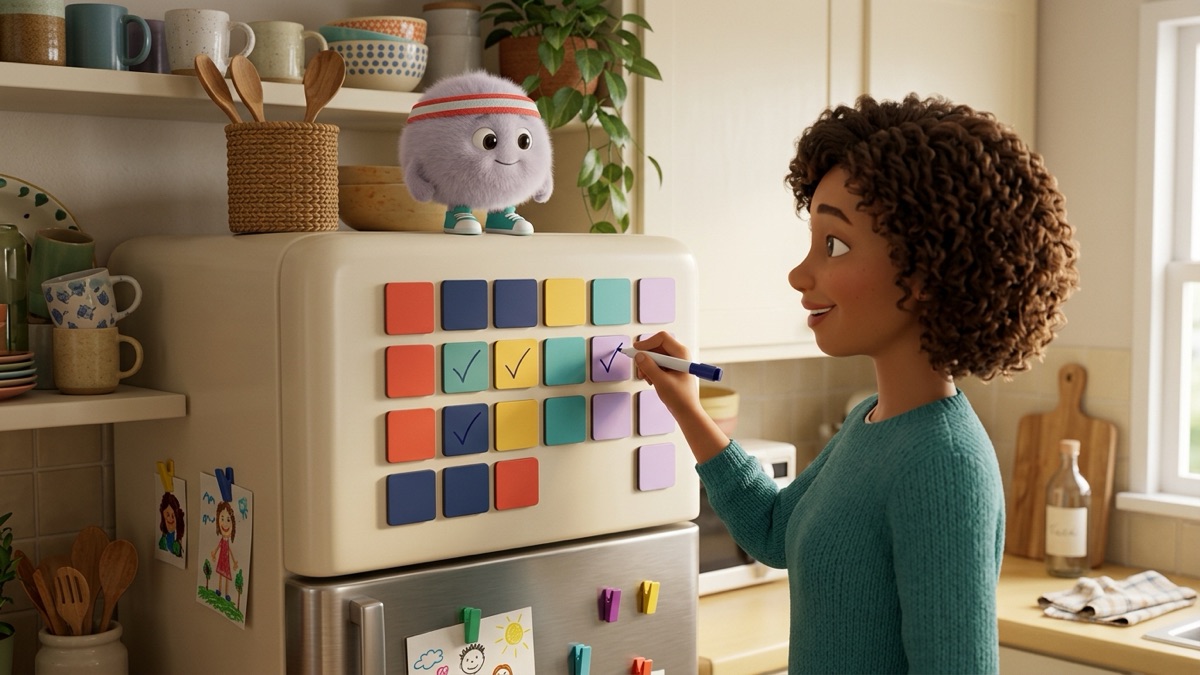
The 10 minute version: set up a planner tonight
- Minutes 1 to 2: Pick the format you already reach for, phone or paper.
- Minutes 3 to 5: Brain dump everything on your mind onto one page.
- Minutes 6 to 7: Choose tomorrow's top 3 and number them.
- Minutes 8 to 9: Add one cleaning zone and one tiny chore, like "wipe the stovetop".
- Minute 10: Put the planner in its home, where you will see it in the morning.
For more ways to make chores easier to start, see our ADHD cleaning tips and the full ADHD cleaning guide.
The takeaway
The right ADHD planner is not the prettiest one. It is the one that lives where you look, holds your week on one page, forgives skipped days and turns chores into tiny, checkable actions. Pick the type that fits how you already work, give it a home and check it three times a day.
The TidySprint app, coming soon, will take the chore side further by turning each day's zone into a short sprint of tiny tasks. For tonight, a pen, one page and 10 minutes are plenty.
TidySprint guides share practical cleaning and routine ideas. They are not medical advice, diagnosis or treatment. If ADHD, depression or anything else is making daily life hard, please talk to a clinician. Using a strong cleaner? Open a window, follow the label, and never mix bleach with ammonia, vinegar or other cleaners.
Questions people ask
How do you use a planner with ADHD?
Use a planner with ADHD by giving it one home, putting everything in that one place and checking it at set times. CHADD suggests checking it at least three times a day (morning, midday and evening) and adding new planner habits a few at a time. Write tasks as small actions instead of big projects, and if you miss a few days, start again on today's page and leave the gap blank.
What is the best type of planner for adults with ADHD?
The one you will see every day. CHADD suggests paper if you like things visible and want to jot notes, and a phone app if you worry about misplacing one more thing or want reminders. A whiteboard works well for shared household chores.
Should an ADHD planner be dated or undated?
Undated pages are usually easier to live with, because skipping a week does not leave a row of blank pages behind. You simply start again on the next clean page.
How often should you check your planner?
CHADD suggests starting with at least three times a day: in the morning to look ahead, around midday, and in the evening to review and plan the next day.
How do I start using a planner again after I stopped?
Start on today's page and leave the missed weeks blank. Work out the one thing that made you stop, such as weight, location or too many sections, and change only that. CHADD says it is fine to try again, since a new habit takes time.
Can a planner help with cleaning?
Yes, if chores go in as small actions rather than big projects. Give each cleaning day one zone, add a tiny task for hard days, and keep a short daily reset list on the same page.
Where these facts come from
- CHADD National Resource Center on ADHD: Time Management and ADHD, Day Planners: chadd.org/for-adults/time-management-planner/
- CHADD National Resource Center on ADHD: Time Management and ADHD, To-Do Lists: chadd.org/for-adults/time-management-and-adhd-to-do-lists/
- NIMH: ADHD in Adults, 4 Things to Know: www.nimh.nih.gov/health/publications/adhd-what-you-need-to-know
- NIMH: Attention-Deficit/Hyperactivity Disorder, What You Need to Know: www.nimh.nih.gov/health/publications/attention-deficit-hyperactivity-disorder-wh
Read next
adhd cleaning
ADHD Cleaning: A Zero-Shame Guide to a Tidier Home

adhd cleaning
ADHD Cleaning Tips That Work on Low-Focus Days

adhd cleaning
ADHD Paralysis and Cleaning: How to Get Unstuck

adhd cleaning
A Dopamine Menu for Cleaning: Make Tidying Feel Good

decluttering
The Maybe Box: Declutter Without the Panic

depression cleaning
Depression Cleaning: Gentle Ways to Start When It Is Hard