
Blog schedules checklists
A Realistic Cleaning Schedule for Any Kind of Week
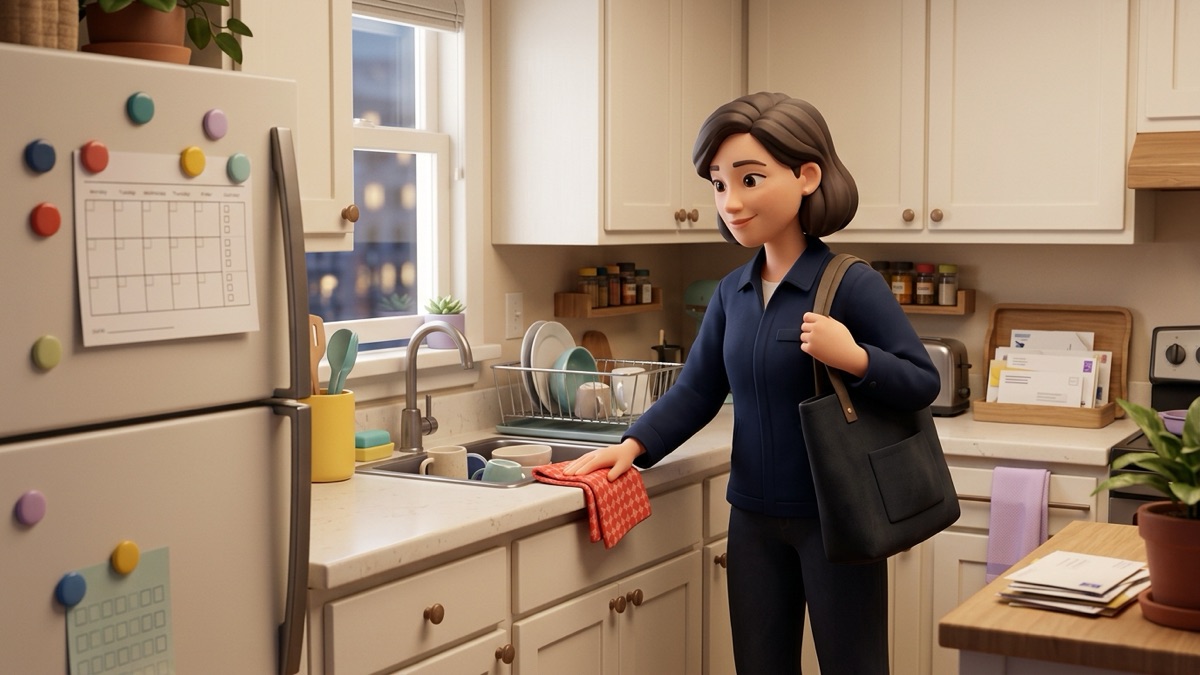
Most cleaning schedules are written for someone with a free Saturday, a full battery and a home that is already clean. If yours falls apart by Wednesday, the schedule was built for the wrong week. Here is how to build one for the week you actually have.
Quick answer
A realistic cleaning schedule fits the week you really have, not your best one. Give each area of your home one short slot a week, add a 5 minute daily reset, and put deeper jobs on a monthly list, one per week. Plan fewer minutes than you hope, keep a hard-day minimum, and never try to catch up.
Key takeaways
- Clean by zone: one area per cleaning day, 10 to 20 minutes, instead of a whole-house marathon.
- A 5 minute daily reset (dishes, trash, 5 things back) does more for how your home feels than one big weekly clean.
- Pick the schedule that matches your life: office job, shift work, parent at home, student or a low-energy stretch.
- Deeper jobs go on a monthly list, one small job a week, so nothing piles up into a lost weekend.
- Missed a week? Do not catch up. Do today's slot and carry on.
What makes a cleaning schedule realistic?
A realistic schedule is one you can still follow on a bad week. That sounds obvious, but many printable schedules assume a steady hour a day and a household that runs like a hotel. Real weeks have late shifts, sick kids, deadlines and evenings where the couch wins.
Four things make the difference:
- It fits your real minutes. If you have 10 minutes on a weeknight, the plan asks for 10, not 45.
- It works by zone. One area per cleaning day, so you finish something instead of starting everything.
- It has a floor. A hard-day minimum: the one task you do when that is all you can manage.
- It has a restart rule. When you miss days (everyone does), you pick up at today, not where you left off.
Here is some good news for your planning: you do not need a daily disinfecting ritual. CDC says cleaning with soap or detergent removes most germs from surfaces, and that sanitizing or disinfecting at home is likely not needed unless someone in the home is sick. It suggests cleaning high-touch surfaces, like light switches, doorknobs and countertops, regularly and after visitors, and other surfaces when they are visibly dirty or as needed. So "as needed" is an official cleaning frequency. You are welcome.
Why clean by zone instead of all at once?
A zone is one area of your home: the kitchen, the bathroom, a bedroom, the laundry, the living room. Zone cleaning gives each one a home day, and on that day you only look at that zone.
It works because it shrinks the decision. "Clean the house" is a fog. "Bathroom, 10 minutes, toilet then sink then mirror" is a list you can start without thinking. You also stop carrying a sponge from room to room, which is where cleaning time quietly disappears.
The trade-off is that nothing gets cleaned every day except what is on the daily reset. That is fine. A bathroom cleaned properly once a week, with a quick sink wipe in between, is a clean bathroom.
What is the 5 minute daily reset?
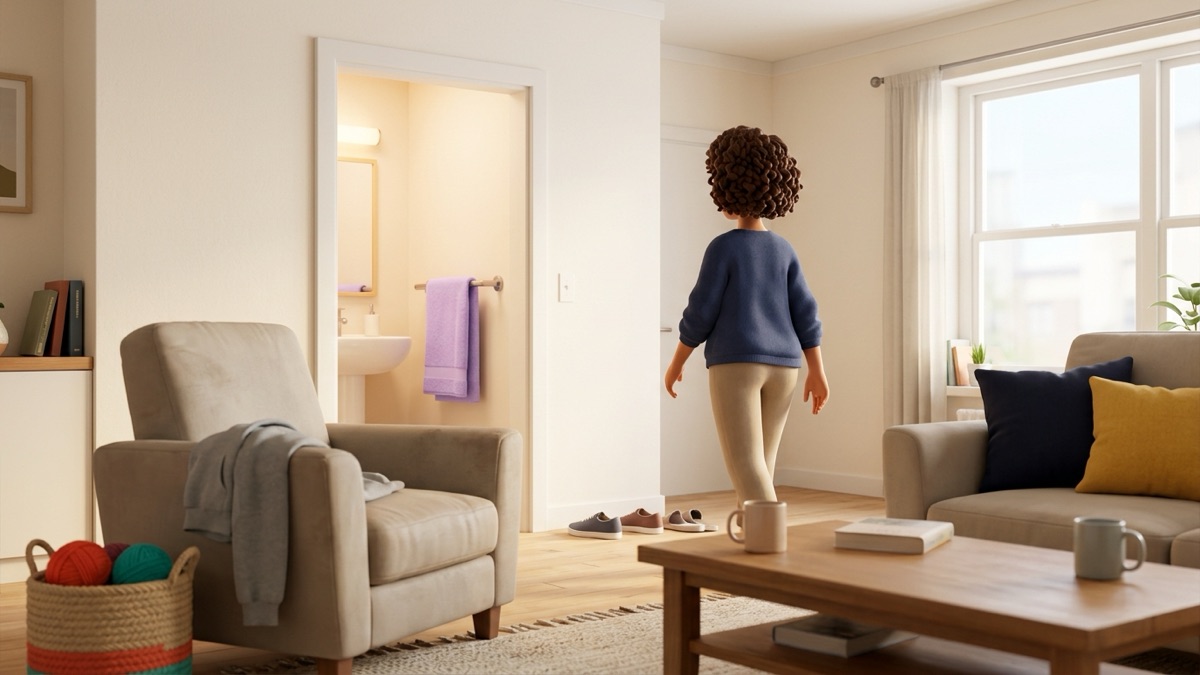
The daily reset is the backbone of every schedule on this page. It takes about 5 minutes, you can do it any evening, and it stops the small stuff from turning into the big stuff.
- Dishes into the dishwasher or the sink, and run it if it is full.
- Put 5 things back where they live.
- Wipe the kitchen counter.
- Take the trash out if it is full.
- Set up tomorrow: keys, bag and clothes by the door.
CHADD, the national ADHD organization, suggests a similar 10-minute pickup each night: take a basket through the house and drop things off where they belong. Five minutes is the version for tired evenings. If you feel like more, do more. If you do not, the first line alone still counts.
Tip
Tie the reset to something you already do every night, like brushing your teeth or switching off the TV. "After I turn off the TV, I do the reset" is much easier to remember than "sometime in the evening."
Realistic cleaning schedules for five kinds of week
Pick the one that looks most like your life, then change anything that does not fit. The times are cleaning minutes on top of the daily reset.
If you work an office job
Weeknights are short and you are tired, so keep them to 10 minutes and let the weekend take the one bigger slot. Three weeknight zones and one weekend zone cover a small home.
| Day | Zone | Time | What it covers |
|---|---|---|---|
| Monday | Kitchen | 10 min | Counters, stovetop, sink, fridge check |
| Wednesday | Bathroom | 10 min | Toilet, sink, mirror, fresh towels |
| Thursday | Laundry | 5 min | Start a load, move it along before bed |
| Saturday | Bedroom and living room | 20 min | Sheets, surfaces, vacuum |
| Other days | Rest | 0 | Daily reset only, if you like |
If you work shifts
A Monday to Sunday plan breaks the moment your rota changes. Plan by where you are in your shift cycle instead, and keep cleaning out of the day after nights.
| Where you are in your rotation | Zone | Time | Notes |
|---|---|---|---|
| Workdays | Daily reset | 0 to 5 min | Before the shift, not after |
| Coming off nights | Nothing | 0 | Sleep is the job |
| First day off | Kitchen | 10 min | Dishes, counters, fridge check |
| Second day off | Bathroom and laundry | 15 min | Toilet, sink, towels, one load |
| Third day off, if you get one | Bedroom and floors | 15 min | Sheets, vacuum |
If you are a parent at home
Your time comes in pieces, and any piece can be interrupted. So choose tasks that still count when you stop halfway (wiping counters, not mopping the whole floor) and anchor them to the natural gaps in the day.
| Anchor | Zone | Time | Kids can help with |
|---|---|---|---|
| After breakfast | Kitchen | 10 min | Plates to the sink, wiping the table |
| Nap or quiet time, twice a week | Bathroom, then floors | 10 min | Handing you towels, not much else |
| Before dinner | Toy pickup | 5 min | All of it, with a timer |
| Weekend, with another adult home | Laundry and sheets | 20 min | Matching socks, carrying baskets |
If you are a student
Small space, odd hours, and a week that bends around deadlines. Keep laundry on a fixed day, clear your desk before the working week, and let exam weeks drop to the reset alone.
| Day | Zone | Time | Notes |
|---|---|---|---|
| Sunday | Laundry | 10 min | Switch loads during a study break |
| Monday | Desk | 5 min | Clear it down to what you use |
| Midweek | Shared kitchen or bathroom | 10 min | Your slot on the house rota |
| Friday | Floor and trash | 10 min | Floor clear, trash out, sheets every other week |
| Exam weeks | Reset only | 5 min | Dishes and trash. That is it. |
Sharing with roommates? Our chore chart for adults helps you split shared zones without keeping score.
If you are in a low-energy week
Some weeks the realistic schedule is almost nothing, and that is still a schedule. Protect the two things that keep a home livable, clean dishes and clean clothes, and let the rest wait.
| When | The whole plan | Time |
|---|---|---|
| Any day | One thing from the reset, or nothing | 0 to 5 min |
| Twice in the week | Dishes and trash | 10 min |
| Once in the week | One load of laundry and a clean towel | 10 min |
| Later | Everything else | 0 |
Low weeks happen. If they keep coming, or arrive with a low mood that will not lift, a health care provider or mental health professional can help, and our guide to depression cleaning has gentle ways to start. If you are in crisis, call or text 988 in the US to reach the Suicide and Crisis Lifeline.
What goes on the monthly list?
Some jobs do not need doing every week but get worse if you never do them. Put them on a monthly list and do one or two a week, so there is never a "deep clean weekend" hanging over you.
| Week | Job | Time | Why it is here |
|---|---|---|---|
| Week 1 | Test the smoke alarms | 2 min | The US Fire Administration says to test them monthly |
| Week 1 | Wipe inside the microwave | 5 min | Easier before splatters bake on |
| Week 2 | Wipe the fridge shelves, one at a time | 15 min | Spills are easier while fresh |
| Week 3 | Check the furnace or AC filter | 5 min | Energy Star suggests checking it monthly |
| Week 3 | Wash the bath mat | 5 min | It lives in the wettest room |
| Week 4 | Clean the dishwasher filter | 10 min | Check the manual for how |
| Week 4 | Vacuum under the sofa cushions | 10 min | Where the snacks and coins went |
The kitchen zone also gets a quick fridge check every week. USDA's food safety service suggests making it a habit to throw out perishable food that should no longer be eaten once a week, and says leftovers keep 3 to 4 days in the fridge.
Heads up
Bathroom day is when stronger cleaners come out. Open a window or run the fan, use one product at a time, and follow the label. Never mix bleach with ammonia, vinegar or other cleaners, because the mix can release gases that are dangerous to breathe.
How do you get back on track after a missed week?
You do not catch up. Catching up is how a missed Tuesday turns into a missed month: the list doubles, the dread doubles, and the easiest option becomes not starting at all.
Instead, run the restart:
- Do the daily reset tonight. Dishes and trash first, because those are the ones that smell.
- Do today's zone, and only today's zone. If it is Wednesday, it is bathroom day, whatever happened on Monday.
- Let missed zones wait for their own day next week. The kitchen will still be there. It always is.
- Shrink the plan if one slot keeps slipping. Missing the same slot two weeks running means it is too big or on the wrong day. It does not mean you failed.
There is some reason to think one missed day is not a disaster. In a 2010 study, 96 volunteers practiced a simple daily habit in the same context (for example "after breakfast") for 12 weeks, and missing one opportunity did not materially affect how the habit formed. It was a small study of eating, drinking and activity habits, not cleaning, and not in people with ADHD, so take it as encouragement rather than proof.

Fun fact
In that same study, the time it took for a new habit to become close to automatic ranged from 18 to 254 days. If your routine still takes effort after a few weeks, you are well within normal.
The 10 minute version
No time to plan anything? This is a whole schedule that fits in about 10 minutes a day.
- Every evening, 5 minutes: the daily reset.
- Three days a week, 5 more minutes: kitchen on the first day, bathroom on the second, laundry on the third.
- Once a week: check the fridge and toss what is past it.
- Everything else: on a good day, pick one thing from the monthly list.
That is it. It will not make your home look like a magazine, but it keeps dishes, clothes and the bathroom in working order, which is what a home is for.
How do you build your own cleaning schedule?
The five weeks above are starting points. Your home, your hours and your energy are specific, so your schedule should be too. Start with three honest questions: how many days a week can you realistically clean, how many minutes on those days, and what is your energy like on a normal week (not your best one)?
If you have ADHD or suspect you might, our ADHD cleaning schedule goes deeper on anchors, visible lists and hard-day minimums. Prefer paper? The ADHD cleaning planner shows how to fill in a printable week, and the room by room cleaning checklist breaks each zone into tiny tasks.
Try it
The free cleaning schedule maker asks five quick questions (your home, your energy, your days, your minutes and who helps) and builds a week by zone with a daily reset, a hard-day minimum and a monthly list. It prints on one page, and it runs in your browser with nothing uploaded.
The TidySprint app, coming soon, will turn each day's zone into tiny tasks and a short timed sprint.
The takeaway
A realistic cleaning schedule is small on purpose. One zone a day, a 5 minute reset, one monthly job a week, and a restart rule for the weeks that go sideways. Pick the week above that looks most like yours, trim it until it feels almost too easy, and let that be enough.
TidySprint guides share practical cleaning and routine ideas. They are not medical advice, diagnosis or treatment. If ADHD, depression or anything else is making daily life hard, please talk to a clinician. Using a strong cleaner? Open a window, follow the label, and never mix bleach with ammonia, vinegar or other cleaners.
Questions people ask
What is a realistic cleaning schedule?
One that fits the week you actually have. For most people that means one area per cleaning day for 10 to 20 minutes, a 5 minute daily reset, and a short monthly list done one job a week.
How often should you clean your house?
CDC suggests cleaning high-touch surfaces like counters, doorknobs and light switches regularly and after visitors, and other surfaces when they look dirty or as needed. For most homes that means a daily reset plus each area about once a week.
How many minutes a day should I spend cleaning?
Whatever you can keep up on a normal week. A 5 minute daily reset plus 10 to 15 minutes on three or four days a week keeps a small home in working order.
What should I do if I miss a week of cleaning?
Do not try to catch up. Do tonight's daily reset, then do whatever area is scheduled for today, and let the missed areas wait for their own day next week.
Is zone cleaning better than cleaning the whole house at once?
For most people it is easier to keep up, because each session is short and has one clear area. A whole-house clean can still happen now and then, but it does not have to be the plan.
Where these facts come from
- CDC: When and How to Clean and Disinfect Your Home: www.cdc.gov/hygiene/about/when-and-how-to-clean-and-disinfect-your-home.html
- CHADD: Organizing the Home and Office Space: chadd.org/for-adults/organizing-the-home-and-office-space/
- US Fire Administration: Smoke Alarms: www.usfa.fema.gov/prevention/home-fires/prepare-for-fire/smoke-alarms/
- Energy Star: Maintenance Checklist (heating and cooling): www.energystar.gov/saveathome/heating-cooling/maintenance-checklist
- USDA Food Safety and Inspection Service: Refrigeration and Food Safety: www.fsis.usda.gov/food-safety/safe-food-handling-and-preparation/food-safety-bas
- USDA Food Safety and Inspection Service: Leftovers and Food Safety: www.fsis.usda.gov/food-safety/safe-food-handling-and-preparation/food-safety-bas
- Lally P, van Jaarsveld CHM, Potts HWW, Wardle J. How are habits formed: Modelling habit formation in the real world. European Journal of Social Psychology, 2010: doi.org/10.1002/ejsp.674
- CDC: Cleaning and Disinfecting with Bleach: www.cdc.gov/hygiene/about/cleaning-and-disinfecting-with-bleach.html
- Poison Control: Chlorine gas: www.poison.org/articles/chlorine-gas
- NIMH: Depression (988 Suicide and Crisis Lifeline): www.nimh.nih.gov/health/publications/depression
Read next
schedules checklists
ADHD Cleaning Planner: A Free Printable That Bends

schedules checklists
Printable ADHD Cleaning Checklist, Room by Room (Free)
schedules checklists
ADHD Cleaning Schedule: Daily, Weekly and Monthly