
Blog messy room
When Your Home Feels Beyond Help: Where to Start Today
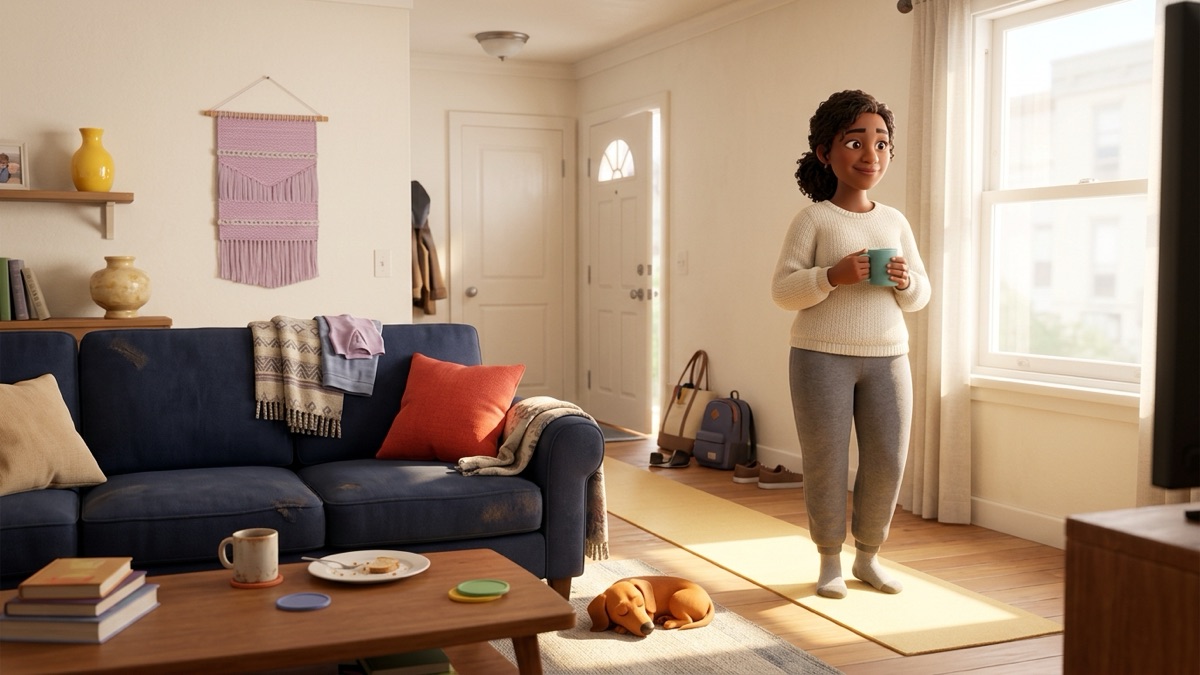
If you searched for this, you are probably standing in the middle of it, or hiding from it in the one room that still works. First things first: your home is not beyond help, and neither are you. Homes get like this for real reasons, and they come back one small patch at a time.
Quick answer
Your home is not beyond help. Start with one hour split into four 15 minute sprints: clear the paths and anything unsafe, then trash, then dishes, then laundry. Rest between each one. After that, do one small zone a day for a week, and ask for help wherever you can get it.
Key takeaways
- Homes get here because of life (illness, grief, long work hours, a new baby, ADHD, depression, a hard year), not because of who you are.
- The first hour has only four jobs: safety and paths, trash, dishes, laundry. Nothing else counts yet.
- The week after is one zone a day, 10 to 20 minutes, with a rest day built in.
- Asking for help, from a friend, family or a cleaning service, is a strategy, not a failure.
- If you have felt low for weeks, or letting go of things feels impossible, a professional can help with that part.
How did my home get like this?
Usually the same way: life got heavy, and energy went to getting through the day. Dishes wait one night, then three. Laundry moves from the basket to the chair to the floor. That is not a moral failing. It is what happens when more comes in than you have energy to put away.
Some things make that gap wider. NIMH lists trouble organizing tasks, trouble managing time and forgetting daily activities such as chores and errands among the signs of inattention in ADHD. Among the possible signs of depression, NIMH lists fatigue, feeling slowed down and an inability to meet responsibilities. And sometimes it is simply a stretch of long shifts, caregiving or grief.
One line of research, described in a 2022 paper in Behavioral Sciences, links more clutter with a weaker sense of home and lower well-being. That is an association, not a cause, and it cannot say which comes first. What many people describe is a loop: a heavy stretch makes the mess grow, and the mess makes the stretch feel heavier. You can step into that loop at any point, and 15 minutes is enough.
What should you do in the first hour?
Not the whole home. Just four sprints of 15 minutes, with a 5 minute rest between each. Drink some water, put on shoes (they protect your feet and make it feel official), and grab trash bags and a laundry basket or two.
Tip
Let the timer decide when you stop, not the mess. When it rings, you rest, even mid-task. That promise is what makes starting the next sprint possible.
Sprint 1: safety and paths (15 minutes)
- Open a window for fresh air, and keep it open while you work.
- Clear a path from your bed to the bedroom door, and from the front door to the kitchen and the bathroom. CDC's home safety advice is simple: "Get rid of things you could trip over."
- Move anything that can burn away from the stove, heaters and candles.
- Press the test button on your smoke alarm. The US Fire Administration says to test smoke alarms every month.
Done looks like: you can walk to every door and the stove area is clear.
Heads up
If you find mold, or damage from a leak or flood, leave it for another day. EPA says that in most cases you can clean a moldy patch smaller than about 10 square feet yourself, wearing gloves and goggles and never touching it bare-handed; keep a window open while you work. Anything bigger, or anything caused by sewage or flood water, is a job for a professional.
Sprint 2: trash (15 minutes)
Only trash: bottles, wrappers, packaging, mail you know you do not need. Start where you spend the most time. Food that has been sitting out goes too, since CDC says never to leave perishable food out for more than 2 hours. Take each full bag outside, or at least to the door. Recycling mixed in is fine for today.
Sprint 3: dishes (15 minutes)
Gather every dish from every room into the kitchen. Fill the sink with hot soapy water and let things soak while you load the dishwasher or wash ten things. If the pile is enormous, paper plates for a week is a strategy, not a failure.
Sprint 4: laundry (15 minutes)
Every piece of clothing and every towel goes into baskets or bags. Start one load. Clean clothes can wait in a pile on the bed. The floor is what matters right now.

Then stop. The hour is done. Eat something, and do not audit what is left.
| Sprint | Focus | Done looks like | Smallest version |
|---|---|---|---|
| 1 | Safety and paths | Clear walkways, stove area clear | One path, bed to door |
| 2 | Trash | Bags out of the rooms you use most | One bag |
| 3 | Dishes | Dishes in the kitchen, soaking | Cups only |
| 4 | Laundry | Clothes off the floor, one load started | One basket |
What should you do for the next week?
One zone a day, 10 to 20 minutes, with a rest day in the middle.
| Day | Zone | Sprint goal |
|---|---|---|
| Day 1 | Kitchen counters | Clear and wipe one stretch of counter, run the dishwasher |
| Day 2 | Bathroom | Sink, toilet and fresh towels, window open or fan on |
| Day 3 | Your bedroom | Floor and bed, using our three-sprint room plan |
| Day 4 | Rest | Nothing, or just the dishes from today |
| Day 5 | Living area | Clear one seat and the table |
| Day 6 | Laundry | Fold and put away one load |
| Day 7 | Walk-through | One basket, carry things back to their rooms |
Bathrooms are where people reach for strong products. Use one cleaner at a time, follow the label, and keep a window open or the fan running while you work.
Try it
On days when even choosing a task feels like too much, open the free cleaning sprint timer, pick "Whole home" and 10 minutes, and do whatever card comes up, or press Skip. Zip, our dust bunny body double, works alongside you. Stop when the timer stops.
For a single room that needs more than the week gives it, our hub on how to clean a really messy room has the full order, with 5, 15 and 45 minute versions.
How do you ask for help?
The hardest part is the first sentence. A few that work:
- For a friend: "My place got away from me. Would you hang out while I do 30 minutes of cleaning? You do not have to touch anything." This is body doubling: CHADD describes a body double as someone who works at the same time as you, in person or over video, and notes there has not been significant research yet on why it helps. Many people still find company makes starting easier. See body doubling for ADHD for more ways to try it.
- For family: "Could you take the dishes while I do laundry? Just for an hour." A specific job is easier to say yes to than "help me."
- For someone you live with: pick one zone each, set one timer, and meet in the kitchen when it rings.
You do not owe anyone an explanation. "It has been a hard stretch" is plenty.
When should you call a cleaning service?
A cleaning service makes sense when the job is bigger than your energy for weeks at a time, when you have a deadline like a move-out, when cleaning is physically hard for you, or simply when you can afford it and it frees you up.
When you call or write, try something like: "My home needs a one-time deep clean. It has been a hard stretch and it is pretty cluttered. Is that something you do?" Then ask:
- What they do and do not handle (dishes, laundry, clutter, inside the fridge).
- Whether they clean around clutter or need it picked up first, since services differ.
- For the quote and what it covers, in writing.
Our guide to depression cleaning services covers services that focus on hard seasons and how to ask.

When is it more than a messy home?
Sometimes the home is not the main problem. It is the sign.
- If you have felt low for a long time. NIMH lists common signs of depression such as a persistent sad, anxious or "empty" mood, loss of interest in things you used to enjoy, and fatigue. If that has been most of the day, nearly every day, for two weeks or more, please talk to a health care provider. Depression can be treated, typically with therapy, medication or both. Our guide to depression cleaning has gentle ways to keep the basics going in the meantime.
- If you wonder about ADHD. A health care provider or mental health professional can do a full evaluation. Stress, sleep disorders, anxiety and depression can all cause symptoms like ADHD, which is why a proper evaluation matters.
- If letting go of things causes real distress. The American Psychiatric Association describes hoarding disorder as persistent difficulty parting with possessions because of a perceived need to save them, where discarding causes distress and the clutter disrupts the use of living spaces. That is a mental health condition, not a messy home, and sprints or timers are not the right help for it. A mental health professional can help, and the APA notes that early treatment matters.
If you are in crisis or thinking about hurting yourself, call or text 988 in the US to reach the 988 Suicide and Crisis Lifeline, free and confidential, any time of day.
The short version
Your home is not beyond help. One hour: paths, trash, dishes, laundry, 15 minutes each, with rests. One week: one zone a day and a day off. Ask for help early, without apologizing. And if the heaviness is bigger than the house, let someone help with that too.
TidySprint guides share practical cleaning and routine ideas. They are not medical advice, diagnosis or treatment. If ADHD, depression or anything else is making daily life hard, please talk to a clinician. Using a strong cleaner? Open a window, follow the label, and never mix bleach with ammonia, vinegar or other cleaners.
Questions people ask
What do I do when my house is too messy to clean?
Do not try to clean the house. Clean one path for 15 minutes: from your bed to the door and from the front door to the kitchen and bathroom. Then rest, and do 15 minutes of trash.
Where do I start when my whole house is a disaster?
With safety and paths, then trash, then dishes, then laundry, in 15 minute sprints with short breaks between them. That is the first hour. Everything else can wait until tomorrow.
Is it okay to hire a cleaner when my house is really messy?
Yes. Hiring help is a practical choice, not a failure. Tell the service honestly what the home looks like, ask what they do and do not handle, and ask for the quote in writing.
How do I know if it is more than a messy house?
If you have felt low, empty or exhausted most of the day for two weeks or more, or if letting go of things causes real distress, talk to a health care provider or mental health professional. In a crisis in the US, call or text 988.
Where these facts come from
- CDC: Preventing Falls and Hip Fractures (reviewed January 27, 2026): www.cdc.gov/falls/prevention/index.html
- US Fire Administration: Smoke Alarms (reviewed September 28, 2026): www.usfa.fema.gov/prevention/home-fires/prepare-for-fire/smoke-alarms/
- CDC: Preventing Food Poisoning (reviewed November 24, 2025): www.cdc.gov/food-safety/prevention/index.html
- EPA: A Brief Guide to Mold, Moisture and Your Home: www.epa.gov/mold/brief-guide-mold-moisture-and-your-home
- NIMH: Attention-Deficit/Hyperactivity Disorder, What You Need to Know: www.nimh.nih.gov/health/publications/attention-deficit-hyperactivity-disorder-wh
- NIMH: Depression: www.nimh.nih.gov/health/publications/depression
- Swanson, Ferrari, Cardinali and Lane 2022, Behavioral Sciences (summarizing Roster, Ferrari and Jurkat 2016): pmc.ncbi.nlm.nih.gov/articles/PMC9137741/
- CHADD ADHD Weekly: Could a Body Double Help You Increase Your Productivity?: chadd.org/adhd-weekly/could-a-body-double-help-you-increase-your-productivity/
- American Psychiatric Association: What Is Hoarding Disorder?: www.psychiatry.org/patients-families/hoarding-disorder/what-is-hoarding-disorder
- 988 Suicide and Crisis Lifeline: 988lifeline.org/
Read next
adhd cleaning
ADHD Cleaning: A Zero-Shame Guide to a Tidier Home

schedules checklists
Printable ADHD Cleaning Checklist, Room by Room (Free)

speed cleaning
Speed Cleaning: How to Clean Your House Fast, No Burnout